
Tag: subjetividad estética
-

The laughter that opens and the laughter that closes
On humour, art, and the temptation to always believe it to be on the side of good. In times of tension, a reasonable hope is repeated: that we require more humour. That in the face of dogma, the trench, and angry solemnity, laughter might return to us some air, some distance, some shared humanity. I share the impulse. But I have learned…
-

The festival that does not fit in the frame
On experience converted into content, and the rest that escapes it. There is a question that the cultural industry has already answered without formulating it: the contemporary festival is not designed solely to be experienced, but to circulate. Recent research states this bluntly. The consumer of experiences seeks, beyond the moment, shareable narrative material…
-

How a world chooses what it observes
Introducing a series on regimes of relevance. Over the past few days, I have published a series of five texts in this public notebook without prior announcement. This silence was intentional; I preferred the collection to be complete before presenting it, allowing for the entire trajectory to be offered rather than five separate notifications. Here it is,...
-
Data fabrication
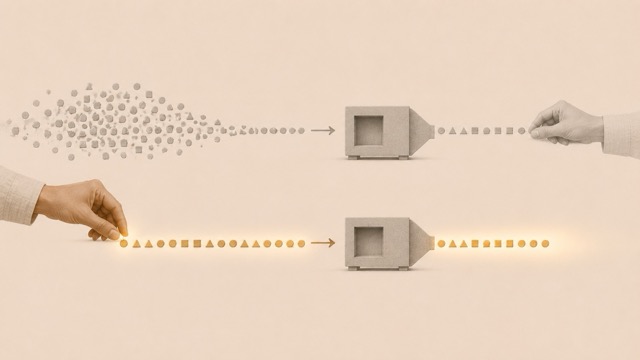
When the surplus lies not in the output, but in the substrate. In the preceding text, I argued that the artist working with massive datasets does not produce the content nor execute the form: they modulate. They determine the threshold, the friction, the taxonomy, the rule. The work was an operation upon an external flow…
-

The box that does not read itself
On the limits of interpretability and the opacity of the machine regime of relevance. This line of inquiry has maintained a thesis throughout four texts: aesthetic understanding rests upon regimes of relevance, and the regime of relevance of a machine differs from that of a human. I demonstrated that this divergence is measurable (in the...
-

The effect of self
On self-relevance as the core of aesthetic judgement and its machine boundary. In the two previous texts of this series, I maintained two points. First, that aesthetic understanding rests upon regimes of relevance, and that misunderstanding—between cultures, between humans and machines—is a misalignment of those regimes. Second, that the divergence between attention...
-

Where the machine looks
On the measurable divergence between human attention and model attention. In the previous text of this series, What Matters and What Is Relevant, I maintained that aesthetic misunderstanding—between human cultures and between humans and machines—can be described as a misalignment of regimes of relevance: distinct hierarchies of what counts...
-
What matters and what is relevant
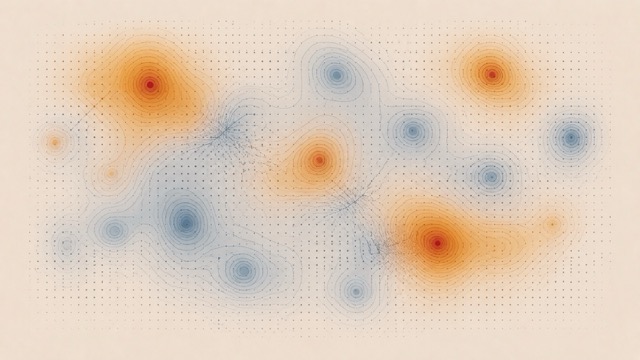
Aesthetic subjectivity, regimes of relevance, and the distance between humans and machines. A journalist from WIRED granted an artificial intelligence agent full access to their digital life—email, documents, calendar, history—and requested that it organise a birthday party. The agent, Gemini Spark, performed a remarkable task: it located an actual reservation for...
-
Writing once more from home
For a time I published on Substack. It was a useful tool for organising texts, sharing ideas and maintaining contact with those who had approached my work from there. I left it for a matter of editorial policy. A decision in favour of something that matters more and more to me: that my writing, my archive and my…