
Tag: IA generativa
-
The author that the law requires
Second movement on origin: what the law truly seeks when it seeks an author. In a previous text, I maintained that we have a cultural obsession with origin: we want to know where a work comes from, through whose hand it passed, what process produced it, as if its value depended on the purity of its provenance. That text…
-
The obsession with origin
What the Thaler case fails to perceive, and what Europe is beginning to examine. In March 2025, a United States court of appeals—the D.C. Circuit—established that United States copyright requires human authorship: a work generated without a human author is not registrable. In March 2026, the Supreme Court declined to review...
-
How a world chooses what it observes
Introducing a series on regimes of relevance. Over the past few days, I have published a series of five texts in this public notebook without prior announcement. This silence was intentional; I preferred the collection to be complete before presenting it, allowing for the entire trajectory to be offered rather than five separate notifications. Here it is,...
-
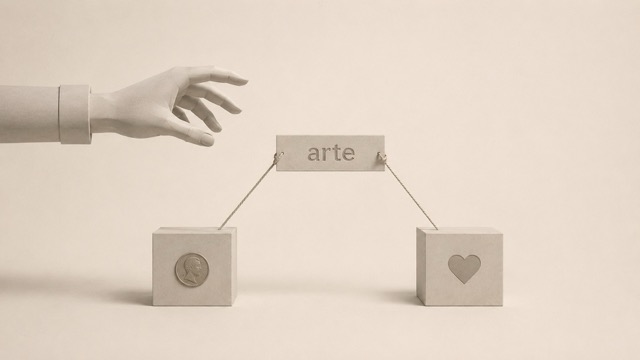
Neither the market nor the broken heart
Sobre una defensa del arte que en realidad defiende otras dos cosas Una columna reciente en El País, firmada por Jordi Labanda, se titula “Contra el arte automático” y resume su tesis en una línea: un algoritmo no pinta porque no soporta existir, ni existe porque tenga miedo a la muerte, ni compone porque alguien…
-
Art that no human would see
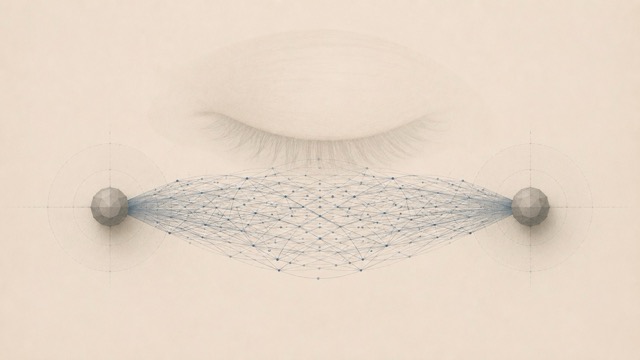
Why art between machines is a theoretical problem rather than a technical one. Suppose a system that generates forms and another that evaluates them, transforms them and returns something, and so on in a closed loop, without any human observing, neither before, during, nor after. Would there be art in that? The question appears to be one of science…
-
Data fabrication
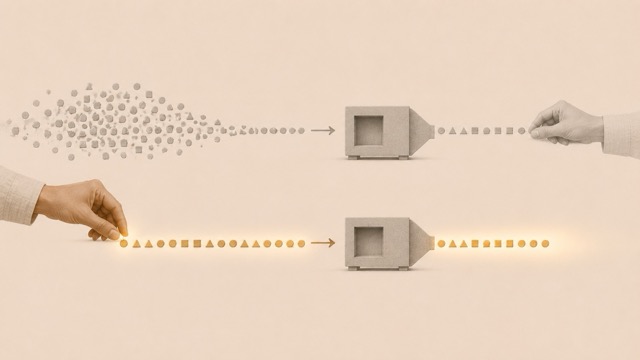
When the surplus lies not in the output, but in the substrate. In the preceding text, I argued that the artist working with massive datasets does not produce the content nor execute the form: they modulate. They determine the threshold, the friction, the taxonomy, the rule. The work was an operation upon an external flow…
-
What the artist does when they no longer make the work
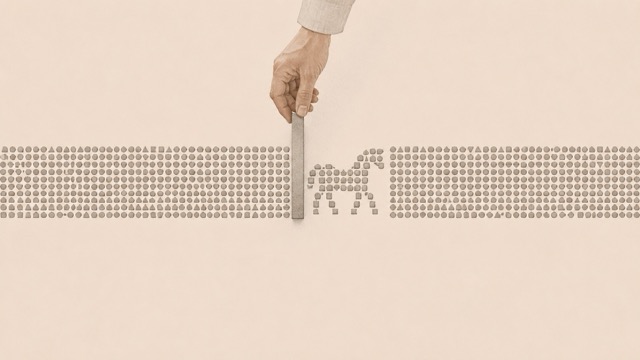
The human surplus in the data-generation-work chain. There is a question that data art renders inevitable, which theory has yet to answer with precision. When the material of the work is a massive dataset that the artist has not produced—telemetry from a particle accelerator, sleep logs,...
-
AI art requires no author (nor does it require Gell)
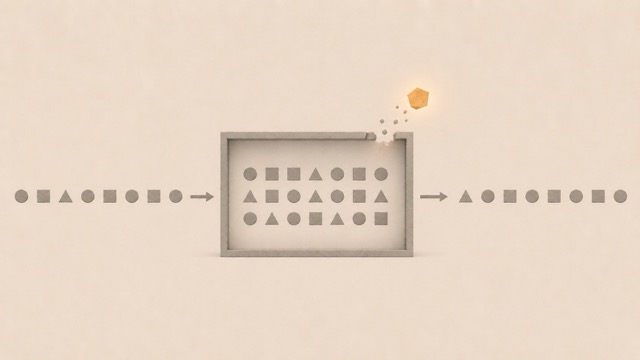
A position on the emerging debate. A debate has been circling itself for three years, and in recent months has begun to find a partial resolution. I intend to explain why this is a partial resolution, and propose what I consider to be a complete one. The debate is as follows:…
-
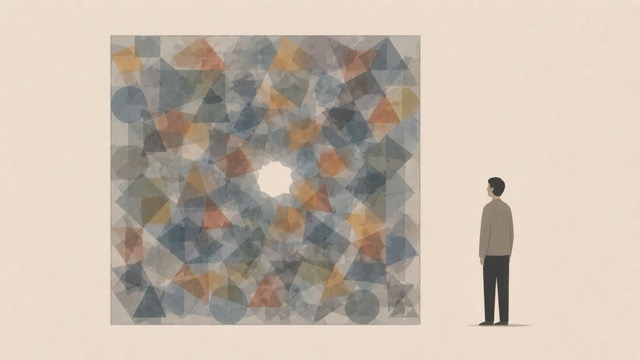
The box that does not read itself
On the limits of interpretability and the opacity of the machine regime of relevance. This line of inquiry has maintained a thesis throughout four texts: aesthetic understanding rests upon regimes of relevance, and the regime of relevance of a machine differs from that of a human. I demonstrated that this divergence is measurable (in the...
-
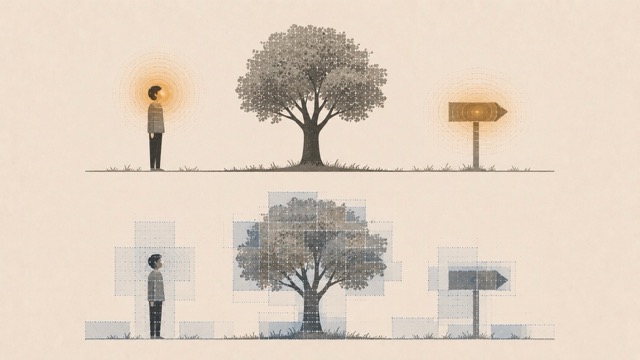
Where the machine looks
On the measurable divergence between human attention and model attention. In the previous text of this series, What Matters and What Is Relevant, I maintained that aesthetic misunderstanding—between human cultures and between humans and machines—can be described as a misalignment of regimes of relevance: distinct hierarchies of what counts...