
Tag: ontología del arte
-
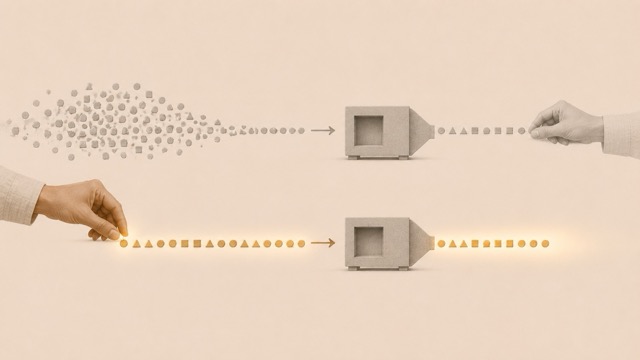
Data fabrication
When the surplus lies not in the output, but in the substrate. In the preceding text, I argued that the artist working with massive datasets does not produce the content nor execute the form: they modulate. They determine the threshold, the friction, the taxonomy, the rule. The work was an operation upon an external flow…
-
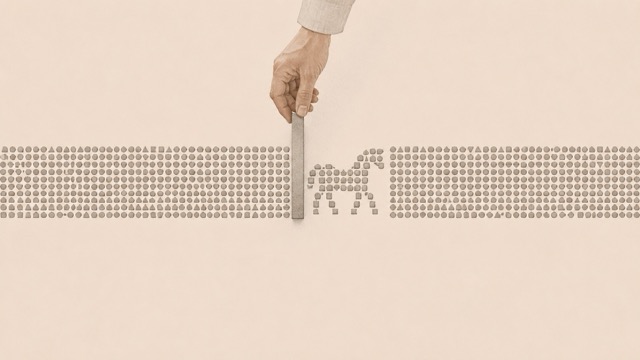
What the artist does when they no longer make the work
The human surplus in the data-generation-work chain. There is a question that data art renders inevitable, which theory has yet to answer with precision. When the material of the work is a massive dataset that the artist has not produced—telemetry from a particle accelerator, sleep logs,...
-
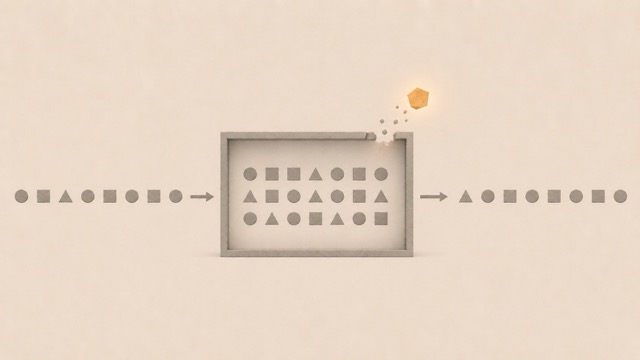
AI art requires no author (nor does it require Gell)
A position on the emerging debate. A debate has been circling itself for three years, and in recent months has begun to find a partial resolution. I intend to explain why this is a partial resolution, and propose what I consider to be a complete one. The debate is as follows:…
-

Curating that which is never the same twice
The curatorial problem of generative art. A gesture defines the profession of the curator: deciding what is hung, where, under what light, next to what, and for how long. That gesture presupposes something so obvious it is rarely articulated: that an object exists. A thing that is there, identical to itself, and which…
-
Processes without meaning
On generative art and what humans and machines may share. The first text in this series concluded with an intuition which I marked as an inference, rather than a conclusion. When discussing the work Rain Blooms by Kazuhiro Tanimoto, I suggested that between very distinct entities—a human and a computational system—the common ground...
-

The non-marketable remainder
Sobre lo que la financiarización del arte no consigue absorber Los cinco textos anteriores de esta serie fueron críticos. Examinaron cómo las infraestructuras digitales y culturales capturan, desplazan, homogeneizan y financiarizan. El último, El arte como activo, documentó cómo el mercado del arte de gama alta opera ya bajo lógica financiera y reorganiza el campo…
-
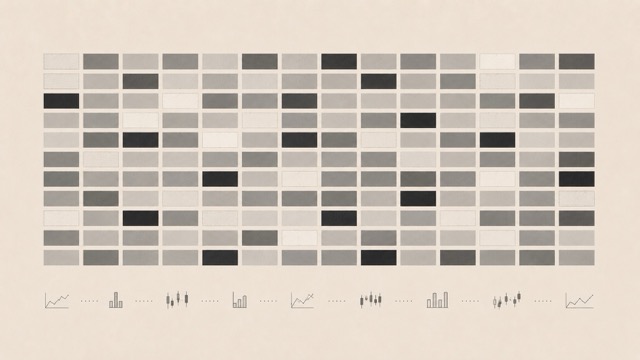
Art as an asset
Sobre la financiarización del mercado del arte como infraestructura Una pintura de medio metro cuadrado, ejecutada con materiales cuyo coste no supera los cuarenta euros, puede venderse por cuarenta millones de dólares en una subasta de Nueva York. La diferencia entre el coste material y el precio final —diez millones de euros por centímetro cuadrado,…
-

When the frame defines the picture
Sobre cómo la institución y el contexto producen la experiencia artística Recientemente leí una noticia que no me sorprende y que tampoco me deja de hacer sonreír. Alguien publicó en una red social una pintura real de Monet —Nenúfares— presentándola como una imagen generada por inteligencia artificial, y pidió a la comunidad que explicara por…
-
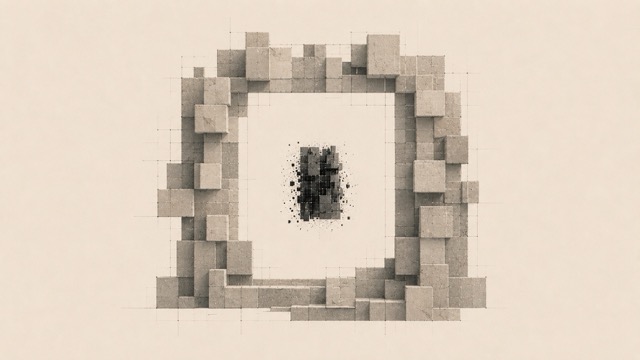
Look first, study later
Sobre la autonomía ontológica del acontecimiento artístico Llevo unos días recuperando una pregunta aparentemente ingenua que me hago desde joven. Si cuando vamos al cine vemos primero la película y luego, si nos interesa, leemos sobre ella, ¿por qué con el arte contemporáneo damos por hecho que tenemos que estudiarlo antes de poder mirarlo? Me…