
Tag: ontología del arte
-
Whose black is it
In 2014, the darkest material ever manufactured was introduced to the world. Known as Vantablack, it was developed by a British firm, Surrey NanoSystems, and is composed of carbon nanotubes so minute and densely packed that light enters between them and virtually never escapes: it absorbs 99.965% of the light it receives. A surface coated with...
-
That which returns
En los últimos años hemos visto algo que parecía impensable hace una generación: objetos que regresan. En 2021 Francia devolvió a Benín veintiséis obras del tesoro real de Abomey, tomadas como botín en 1892. En 2022 Alemania firmó la transferencia a Nigeria de los mil ciento treinta Bronces de Benín identificados en sus museos públicos,…
-
Which original must be returned: the restoration of the Sistine Chapel
When the Vatican Museums concluded, in 1994, fourteen years of cleaning the frescoes of the Sistine Chapel, the world encountered a Michelangelo it did not expect. Beneath centuries of candle soot, brazier smoke, animal glue, and overpainting from previous restorations, an explosion of colours appeared: pinks, acidic greens, luminous yellows,...
-

The empty chair
On 7 July, The New York Times published a report with a headline that sounds like retribution: the revenge of the philosophy graduates. Artificial intelligence laboratories are hiring philosophers. Not as an ornamental gesture: Google DeepMind and Anthropic each have at least half a dozen, there is a constitution of twenty-three thousand…
-
The author that the law requires
Second movement on origin: what the law truly seeks when it seeks an author. In a previous text, I maintained that we have a cultural obsession with origin: we want to know where a work comes from, through whose hand it passed, what process produced it, as if its value depended on the purity of its provenance. That text…
-
Declaring to avoid debate
On the declaration of 'Bien de Interés Cultural' as a device, regarding Extremadura. There is a silent way to win an argument: to make it impossible to discuss. Not through prohibition or censorship, but through a more elegant gesture: elevating the object in dispute to a category that places it above debate. In…
-
The obsession with origin
What the Thaler case fails to perceive, and what Europe is beginning to examine. In March 2025, a United States court of appeals—the D.C. Circuit—established that United States copyright requires human authorship: a work generated without a human author is not registrable. In March 2026, the Supreme Court declined to review...
-
What the system renders improbable
Sobre la ignorancia como producto de las infraestructuras digitales Hay una idea cómoda sobre la información que conviene desmontar: la de que vivimos rodeados de ella, que el problema de nuestra época es el exceso, que nunca hubo tanto disponible al alcance de cualquiera. Es verdad a medias, y la mitad que falta es la…
-
Neither the market nor the broken heart
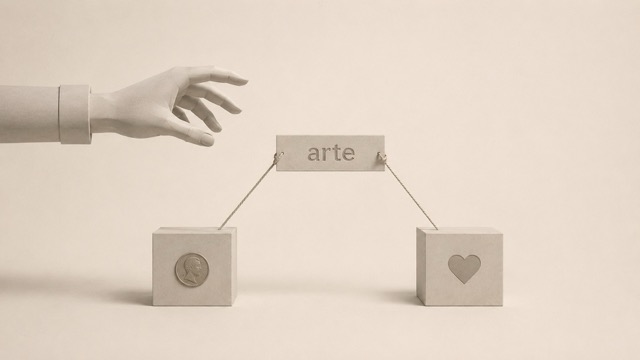
Sobre una defensa del arte que en realidad defiende otras dos cosas Una columna reciente en El País, firmada por Jordi Labanda, se titula “Contra el arte automático” y resume su tesis en una línea: un algoritmo no pinta porque no soporta existir, ni existe porque tenga miedo a la muerte, ni compone porque alguien…
-
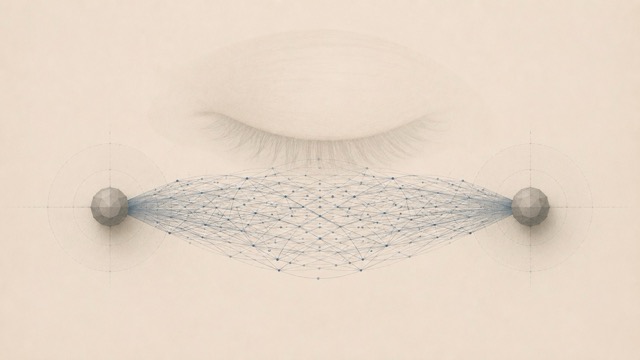
Art that no human would see
Why art between machines is a theoretical problem rather than a technical one. Suppose a system that generates forms and another that evaluates them, transforms them and returns something, and so on in a closed loop, without any human observing, neither before, during, nor after. Would there be art in that? The question appears to be one of science…