
An independent research space concerning contemporary issues. This is neither a formal academic publication nor an opinion column: it is analytical work supported by data on topics I consider relevant and worthy of rigorous examination, even when they fall outside specialised academic circuits. Open to co-authorship. Proposals to: hola@juanesteban.art
Receive it via email
Entries: 125
-
Neither the market nor the broken heart
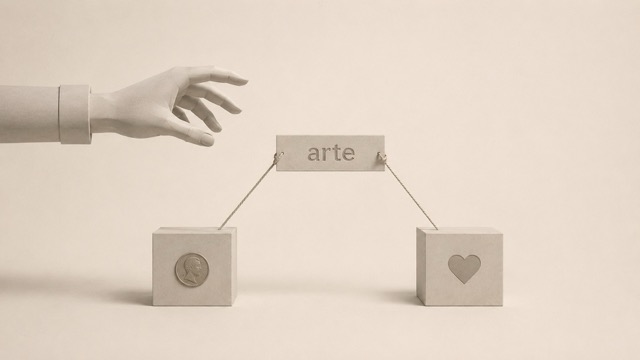
On a defence of art that in reality defends two other things A recent column in El País, signed by Jordi Labanda, is titled "Against automatic art" and summarises its thesis in one line: an algorithm does not paint because it cannot bear to exist, nor does it exist because it fears death, nor does it compose because someone...
-
Art that no human would see
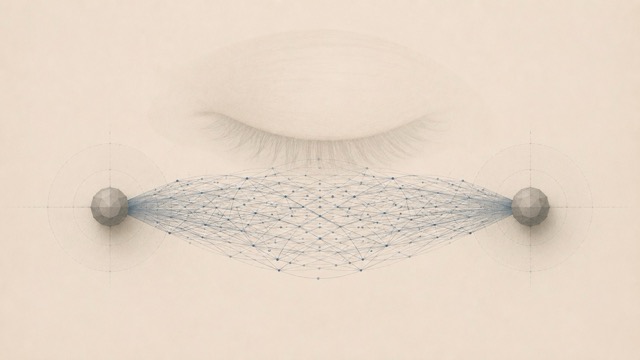
Why art between machines is a theoretical problem rather than a technical one. Suppose a system that generates forms and another that evaluates them, transforms them and returns something, and so on in a closed loop, without any human observing, neither before, during, nor after. Would there be art in that? The question appears to be one of science…
-
Data fabrication
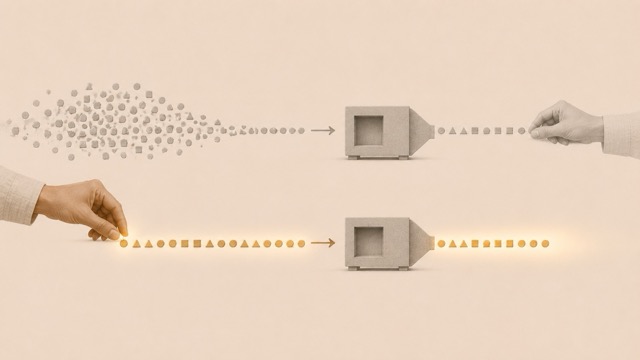
When the surplus lies not in the output, but in the substrate. In the preceding text, I argued that the artist working with massive datasets does not produce the content nor execute the form: they modulate. They determine the threshold, the friction, the taxonomy, the rule. The work was an operation upon an external flow…
-
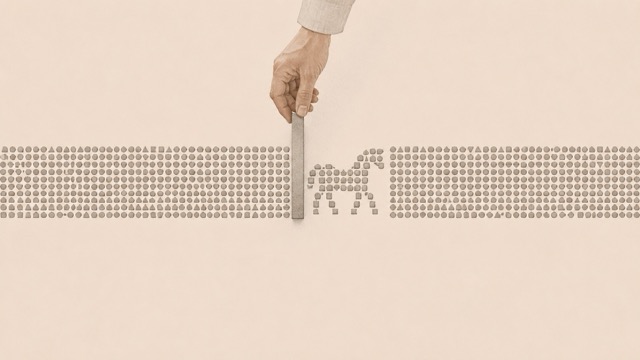
What the artist does when they no longer make the work
The human surplus in the data-generation-work chain. There is a question that data art renders inevitable, which theory has yet to answer with precision. When the material of the work is a massive dataset that the artist has not produced—telemetry from a particle accelerator, sleep logs,...
-
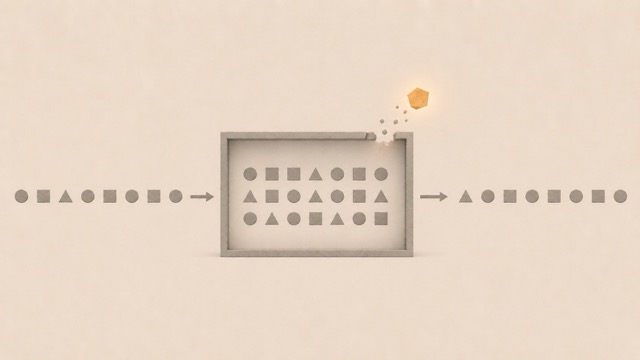
AI art requires no author (nor does it require Gell)
A position regarding the emerging debate. The discourse has been circular for three years; in recent months, it has begun to find a partial resolution. I propose a comprehensive solution. The debate is as follows: who is the author of a work created with artificial intelligence? For three years, the responses…
-
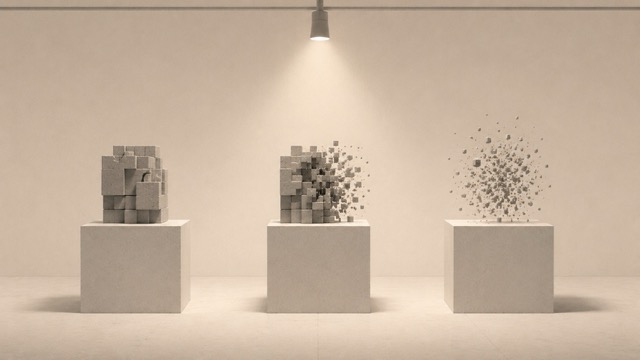
Curating that which is never the same twice
The curatorial problem of generative art. A gesture defines the profession of the curator: deciding what is hung, where, under what light, next to what, and for how long. That gesture presupposes something so obvious it is rarely articulated: that an object exists. A thing that is there, identical to itself, and which…
-
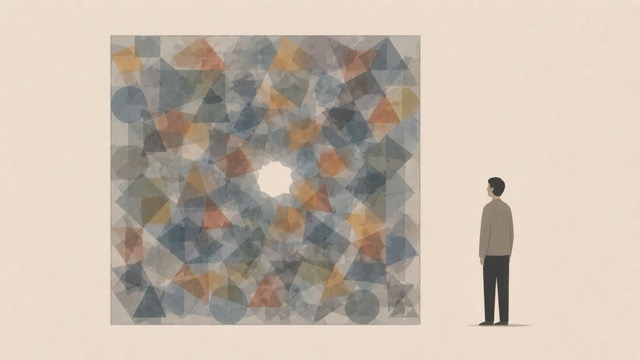
The box that does not read itself
On the limits of interpretability and the opacity of the machine regime of relevance. This line of inquiry has maintained a thesis throughout four texts: aesthetic understanding rests upon regimes of relevance, and the regime of relevance of a machine differs from that of a human. I demonstrated that this divergence is measurable (in the...
-
Processes without meaning
On generative art and what humans and machines may share. The first text in this series concluded with an intuition which I marked as an inference, rather than a conclusion. When discussing the work Rain Blooms by Kazuhiro Tanimoto, I suggested that between very distinct entities—a human and a computational system—the common ground...
-
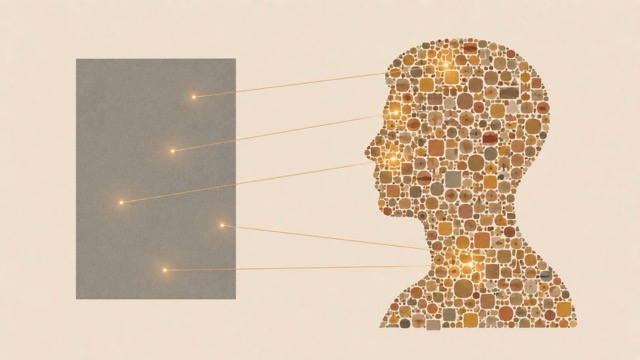
The effect of self
On self-relevance as the core of aesthetic judgement and its machine boundary. In the two previous texts of this series, I maintained two points. First, that aesthetic understanding rests upon regimes of relevance, and that misunderstanding—between cultures, between humans and machines—is a misalignment of those regimes. Second, that the divergence between attention...
-
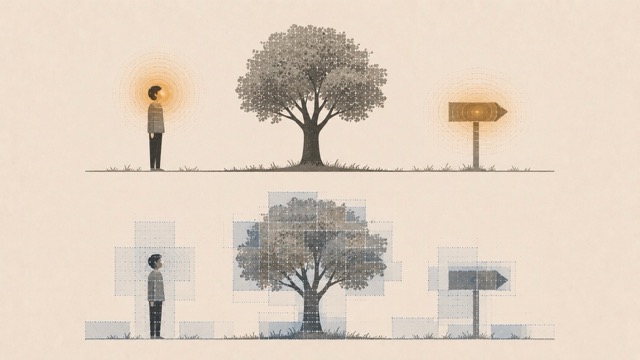
Where the machine looks
On the measurable divergence between human attention and model attention. In the previous text of this series, What Matters and What Is Relevant, I maintained that aesthetic misunderstanding—between human cultures and between humans and machines—can be described as a misalignment of regimes of relevance: distinct hierarchies of what counts...