
An independent research space concerning contemporary issues. This is neither a formal academic publication nor an opinion column: it is analytical work supported by data on topics I consider relevant and worthy of rigorous examination, even when they fall outside specialised academic circuits. Open to co-authorship. Proposals to: hola@juanesteban.art
Receive it via email
Entries: 124
-
Writing once more from home
For a time I published on Substack. It was a useful tool for organising texts, sharing ideas and maintaining contact with those who had approached my work from there. I left it for a matter of editorial policy. A decision in favour of something that matters more and more to me: that my writing, my archive and my…
-

The non-marketable remainder
On what the financialisation of art fails to absorb The five previous texts in this series were critical. They examined how digital and cultural infrastructures capture, displace, homogenise and financialise. The last one, Art as an asset, documented how the high-end art market already operates under financial logic and reorganises the field...
-
Art as an asset
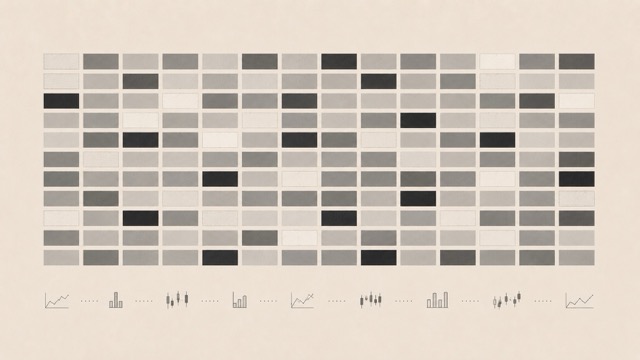
On the financialisation of the art market as infrastructure A painting of half a square metre, executed with materials whose cost does not exceed forty euros, can be sold for forty million dollars at a New York auction. The difference between the material cost and the final price—ten million euros per square centimetre,...
-

Who trains the world
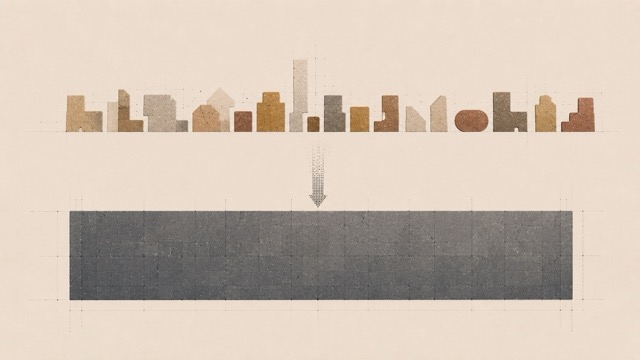
On the North/South asymmetry in generative AI as cultural infrastructure When a generative AI system is tasked with representing "a city" without further qualifiers, what it produces is not a generic city: glass skyscrapers, squares with ornamental fountains, paved streets with painted lines, urban furniture of European or North American style. The...
-
The price of the model
On cultural work in the generative AI device In 2019, the anthropologist Mary L. Gray formulated a hypothesis that has aged well and poorly at the same time. Her book Ghost Work, written with Siddharth Suri, described the hidden economy of micro-workers who classify images, moderate content and label data so that the...
-

When the frame defines the picture
On how the institution and the context produce the artistic experience I recently read a piece of news that does not surprise me and which also does not fail to make me smile. Someone published a real Monet painting—Water Lilies—on a social network, presenting it as an image generated by artificial intelligence, and asked the community to explain why...
-
Look first, study later
On the ontological autonomy of the artistic event I have spent a few days revisiting a question I have asked myself since I was young. If when we go to the cinema we watch the film first and then read about it, why with contemporary art do we take it for granted that we have to study it before we can look at it? I formulated it after leaving...
-
Art, productive time and material survival
Resumen ejecutivo La historia del arte puede leerse como una historia de la organización social del tiempo creativo. Antes de ser “genio”, el artista necesita duración, concentración, materiales, espacio, mediaciones y una forma de subsistencia. En la larga duración histórica, ese tiempo ha sido financiado por regímenes muy distintos: culto religioso, corte, nobleza, burguesía comercial,…
-
Post-NFT Digital Art. Infrastructure, Archive, and Recognition III
Recognition. Institutions, market and canon. This entry concludes the series. Entry I examined provenance—what renders a digital work identifiable as a work—through the case of the artist romainiti and the closure of Foundation. Entry II addressed persistence—what is required for a work to endure and continue...
-
Post-NFT Digital Art. Infrastructure, Archive, and Recognition II
Persistence. Archive, custody and the duration of digital art. This research examines, from the perspective of curatorial practice and collecting, what remains of tokenised digital art following the collapse of the speculative NFT market. Entry I examined the first dimension of the triadic framework—provenance, persistence and recognition—through the case of the artist romainiti and...