
On cultural labour within the generative AI apparatus
In 2019, the anthropologist Mary L. Gray formulated a hypothesis that has aged both well and poorly. Her book Ghost Work, written with Siddharth Suri, described the hidden economy of micro-workers who classify images, moderate content, and label data so that artificial intelligence systems appear to function autonomously. Gray warned then that this logic could extend to the rest of intellectual labour: what she termed the potential “uberisation” of cognitive work, a fragmentation of the profession into precarious, on-demand micro-tasks.
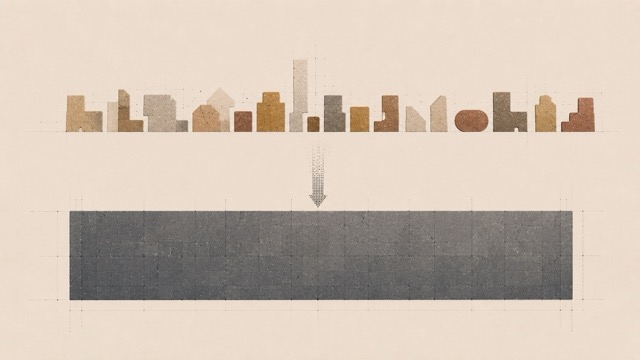
Six years later, the citation circulates frequently in discussions regarding generative AI and cultural work. I use it here as a starting point, not as a conclusion. My thesis is that Gray saw something important but could not yet see the decisive factor: what is occurring in 2025-2026 with cultural work under the pressure of generative AI is not merely uberisation. It is something structurally more severe: the systematic displacement of value from those who produce work to those who design, fund, and operate the infrastructures that process, generate, and distribute it.
The distinction matters because it shifts where the leverage lies. It connects directly to the line of thought I have been developing in this public notebook: in Mass technology and ethical consumption, I argued that responsibility for digital sustainability is infrastructural, not individual; in When the frame paints the picture, I demonstrated how institutional infrastructure produces the artistic experience rather than merely influencing it. This text extends the same logic to cultural production itself. The question is not whether creators should use less generative AI. It is who is designing the infrastructures that reconfigure cultural production, under what conditions, and with what consequences.
1. What Gray saw, what she could not yet see
Ghost Work accurately described a phenomenon that, in 2019, was primarily visible within the data economy: the transformation of complex tasks into standardised micro-tasks, executed by geographically fragmented workers who were poorly remunerated, lacked labour protections, and were contractually classified as “independent contractors” despite operating under algorithmic control. Amazon Mechanical Turk, outsourced content moderators in the Philippines or Kenya, the annotators training computer vision models. Gray observed this, named it, and warned that the logic could expand into roles previously considered complete intellectual professions.
Her intuition was correct and necessary. However, the empirical landscape of 2019 differed from the current one in at least three dimensions.
First. In 2019, mass-market generative AI did not yet exist in a full sense. GPT-2 had appeared that year, but its use was marginal; DALL-E arrived in 2021, Midjourney in 2022, Stable Diffusion in 2022, and ChatGPT in November 2022. Gray’s inquiry operated upon the data work that fuelled the models. Today’s inquiry operates upon the cultural work that the models imitate, substitute, or displace.
Second. The subject of the “uberisation” in Gray was the invisible micro-worker. The subject of the current phenomenon is the fully visible professional creator: the illustrator, the musician, the screenwriter, the translator, the designer, the photographer. We are not discussing invisible labour that becomes visible upon description, as in Ghost Work. We are discussing previously recognised, professional labour, articulated in trades with a history, which is being reorganised by a new infrastructure.
Third. In the data economy described by Gray, the micro-fragmented worker at least received payment for the task. Insufficient, precarious, without rights, but payment nonetheless. In the current regime of generative AI, the creators whose work trains the models receive no payment whatsoever for that contribution, save for marginal initiatives such as the Shutterstock Contributor Fund, to which I shall return later.
Uberisation was a useful metaphor for describing a partial transformation of intellectual labour. It is an incomplete metaphor for describing what is occurring now. And the difference between partial and incomplete matters: a partial metaphor illuminates; an incomplete metaphor can obscure the central problem behind the part it does describe well.
2. What the 2024-2025 data demonstrates
Empirical evidence regarding generative AI in the cultural sector has multiplied rapidly. Four recent studies allow us to view the phenomenon with a certain clarity.
Productivity and homogenisation. Zhou and Lee (2024), in a study of four million digital works published on online platforms, found that artists who adopt generative AI produce approximately 25% more work and receive 50% more “likes” per work. Yet the same study noted something less discussed: the average novelty of content produced with AI assistance is declining. Works tend to resemble one another more closely, even as “peak novelty”—the most exploratory ideas within the set—increases. It is a classic optimisation pattern: higher output, greater algorithmic recognition, lower differentiation. The distribution of value concentrates at the top end; the average flattens.
Projected decline in revenue in specific sectors. The International Confederation of Societies of Authors and Composers (CISAC), in its 2024 global economic study, projected that music creators' revenues could fall by approximately 24% by 2028 due to progressive substitution by AI-generated content. For audiovisual creators, the projected decline is 21%. The same report estimates that the global market for AI-generated content will grow from approximately 3 billion euros in 2024 to 64 billion in 2028. This is a transfer of unprecedented magnitude within the cultural sector: the money does not disappear, it is redistributed. It leaves the pockets of creators and enters the balance sheets of technology platforms.
Pre-existing structural precarity. The Cultural Freelancers UK (2024) study, conducted in the United Kingdom, found that 73% of cultural freelancers earn less than 25,000 pounds annually. 60% are not affiliated with any trade union. Many work unpaid hours to complete projects and report “income ceilings” mid-career: economic stagnation despite accumulated experience. These data matter because they indicate that the pressure of generative AI falls upon a cultural sector that was already operating under conditions of sustained structural precarity. AI does not inaugurate the problem. It intensifies it upon an already fragile foundation.
Mass adoption with explicit reservations. The 2025 Adobe report, based on a survey of 16,000 creators worldwide, found that 86% actively use generative AI in their work, 76% state that it has accelerated the growth of their professional activity, and 81% use AI to generate text or content they could not previously produce. Simultaneously, 69% express explicit concern regarding the unauthorised use of their own work in training. Adoption is mass-scale and, at the same time, profoundly ambivalent: creators use the tool because they can, and distrust it because they know.
These four findings are not isolated pieces. They form a pattern. Generative AI increases the immediate productivity of the individual creator while homogenising the aggregate result, projects significant sectoral revenue declines onto an already precarious labour base, and produces mass adoption among professionals who simultaneously distrust the conditions of their own usage. The pattern is not “fragmented workers performing micro-tasks”. It is something distinct, and it deserves a name of its own.
3. Why “uberisation” falls short
The Uber metaphor functioned because it captured three features: the precarisation of a previously stable trade, algorithmic control over labour, and the shifting of risk from the company to the worker classified as self-employed. Applied to cultural labour under generative AI, the metaphor partially illuminates those three features. But it leaves out the decisive factor.
Uber, after all, pays the driver per trip. Its business model extracts rent—commission on every journey, control over fares, shifting of operating costs to the worker—but the driver receives income for each concrete act of labour. The relationship of exploitation is dense, asymmetric, problematic. But there is a transaction.
Within the generative AI regime operating across the cultural sector, this does not occur. Creators whose work trains generative models are not consulted, do not sign contracts, and do not receive payment. Their work is assimilated by the model during training and subsequently reproduced, reorganised, or stylistically imitated by the infrastructure without any form of compensation. Extraction does not operate through asymmetric transaction: it operates through silent incorporation.
The Shutterstock case illustrates this with cruel precision. In 2023, the platform launched a 'Contributor Fund' to compensate photographers whose images had trained its generative models. The initiative was presented as an ethical response to the problem of appropriation. An analysis published in PetaPixel in July 2023 estimated that the average payment per image used in training was approximately 0.0078 dollars; the median, around 0.0069 dollars. A professional image whose commercial licence would cost the end user tens or hundreds of dollars was compensated to the author with less than one cent. The company, meanwhile, maintained annual net revenues in the order of 32 million dollars.
This is not uberisation. It is something more radical. Uber at least pretends to be an employer. Generative AI platforms pretend nothing: they simply operate upon existing cultural raw material as if it were a public resource, while the resulting product is the private property of the platform. It is silent dispossession with a veneer of symbolic compensatory funding.
Here it is appropriate to introduce a distinction that the Uber metaphor does not allow one to formulate. What is occurring is not so much the fragmentation of labour—which did occur in the Ghost Work scenario—as the displacement of value. These are two distinct phenomena. Fragmentation describes how the task is reorganised. Displacement describes who captures the rent that the task generates. They may coexist, but their logic is different, and the lever for intervention is different.
4. The displacement of value as a structural problem
I term the displacement of value the process by which the economic and symbolic rent generated by cultural production is transferred from those who produce the work to those who operate the infrastructures that process it. This is not a new process: the art market has always distributed value asymmetrically between creators, intermediaries, and platforms. What changes with generative AI is the magnitude, the speed, and, above all, the opacity of the displacement.
Magnitude. The CISAC figures already cited—a projected 24% decline in musical income, the transfer of tens of billions of euros from the creative sector to the technology sector—are of an order of magnitude that the cultural system had not previously experienced in such short timeframes. We are not discussing the loss of jobs in a sub-industry. We are discussing the structural reallocation of value across the entire cultural chain.
Speed. The habitual transition between technical regimes of cultural labour—from painting to the industrial workshop, from the workshop to photography, from photography to cinema, from cinema to digital—has historically been measured in decades. The transition currently occurring is measured in months. This matters because the speed of change prevents the collective articulation of a response. Trade unions, professional associations, legal frameworks, and institutional practices operate on long timescales. The infrastructure transforms faster than the sector can organise itself to discuss it.
Opacity. Unlike the traditional art market—which is opaque but documentable—the generative AI infrastructure is structurally opaque by design. We do not know with precision which images trained Midjourney. We do not know what proportion of a specific author's work was processed. We do not know how the weights are distributed. We do not know what implicit curatorial selection decisions the training teams applied. The developers themselves, in many cases, could not answer these questions with precision. Opacity is not accidental: it is an operational condition of the system.
This displacement of value also operates on two distinct planes that should be separated.
Economic level. That which the figures from CISAC, Shutterstock, and Adobe document. Income that leaves the pockets of creators and enters those of the platforms. Here, the problem is accounting-based and, in principle, susceptible to intervention via mandatory licensing, significant compensatory funds, and specific remuneration rights. The European Union has begun to debate these avenues in the context of the AI Act and the update to the copyright directive. The European Parliament, in a report from July 2025, has indicated that the mass training of generative models on protected work often violates current legal exceptions and demands new frameworks. It is regulatory sluggishness, but at least there is an institutional diagnosis.
Symbolic and ontological plane. This is more difficult to name and, therefore, to regulate. What generative AI displaces is not only the creator's income, but something more structural: the regime of attributing cultural value to human production. When a tool can generate a thousand images in an artist's style in one day, the style ceases to function as a mark of singularity and begins to operate as a technical filter. When a system can compose a song that reasonably passes for that of a recognised composer, the composition ceases to be an index of a human process and begins to be one among many possible outputs. This connects with my argument in When the Frame Paints the Picture: it is not that the work changes because of the tool; it is that the interpretive framework changes and, with it, what the work can signify within the cultural system.
This is where the Uber metaphor becomes not only incomplete but misleading. Uber does not transform the nature of the journey: going from point A to B remains what it was. Generative AI, regarding cultural production, does transform the nature of the work. It is not just that the illustrator earns less: it is that the craft of illustrating is reconfigured in its very definition.
5. The infrastructural question
If the problem is the displacement of value, and not the fragmentation of labour, then the levers for intervention lie elsewhere. The question is not how to protect the individual creator from the competitive pressure of generative AI. The question is how to intervene in the design of the infrastructures that produce that displacement.
This is precisely the same logic I maintained in Mass Technology and Ethical Consumption: responsibility for the social consequences of digital infrastructures is not an individual matter for users, but a collective matter of design, business models, and regulation. The categorical error is the same here: asking an illustrator, musician, or translator to 'adapt their practice to the new context' is to shift onto the weakest side of the chain a responsibility that structurally belongs to those who operate the infrastructure.
There are three identifiable levels of infrastructural intervention.
Design of the models themselves. Who decides which data trains the model, in what proportions, and with what rules of exclusion and consent. Today, this is decided internally within each company, without transparency or specific regulation. A responsible infrastructure would require, at a minimum: mandatory transparency regarding training datasets, effective opt-out mechanisms, systems for significant—not symbolic—compensation for creators whose work trains commercial models, and traceability regarding the influence of specific works on specific outputs. None of this currently exists in a generalised form.
Business model. When the business of generative AI is to generate content that substitutes for prior work, capturing rent that previously circulated through the cultural sector, the structural incentive pushes to expand the displacement of value. As long as this does not change—and it will not change through the platforms' own initiative—marginal technical improvements to the system will only intensify the problem. Regulation would need to intervene here: mandatory collective licensing, remuneration rights associated with the use of work in training, and sectoral funds financed by the platforms themselves in proportion to their revenue.
Legal frameworks. Three dynamics deserve specific attention. First, the copyright regime applied to model training: the 'text and data mining' exception provided for in some European legislations was designed for academic research and is being applied, problematically, to mass commercial exploitation. Second, transparency regimes: the European AI Act introduces transparency obligations for generative models, but its effective implementation is yet to be demonstrated. Third, collective cultural rights: UNESCO has drawn attention to the 'cultural dispossession' that can occur when local cultural data is extracted without consent by models trained in other contexts. All three dynamics require legal frameworks that do not yet exist, or that exist in a fragmentary and unequal manner across jurisdictions.
Infrastructural intervention is not a substitute for the individual commitment of creators. It is the condition for that commitment to have effect. Asking individual creators to refuse to use generative AI or to negotiate individually with massive platforms is to ask them to bear, alone, a problem whose scale entirely exceeds the capacity for individual response.
6. What this is not
It is prudent to be explicit regarding three interpretations I reject, as they would weaken the argument if they were confused with it.
I am not maintaining that generative AI is, in itself, the problem. The tool is ambivalent. It can operate as a legitimate amplifier of the creative practice of those who use it with awareness, it can facilitate formal exploration, and it can produce reorganisations of the field of possible configurations that satisfy the criteria of structural surplus that I defended in Art as Structural Surplus. The problem is not the existence of the technology. The problem is the infrastructure that operates it and the conditions under which that infrastructure has been designed and deployed.
I am not maintaining nostalgia for a previous regime. The art market prior to generative AI also operated on displacements of value: gallery commissions, intermediary margins, and asymmetric distribution of rent between creator and structure. The difference is one of magnitude and speed, not of absolute nature. Returning to a previous state is neither an option nor an objective. The question is how the transition is designed.
I am not maintaining that creators lack agency. The critique of the individualism of responsibility does not imply denying that creators can organise, negotiate collectively, lobby for regulation, or articulate coordinated sectoral responses. In fact, the only realistic path for intervention lies in that collective organisation. What I criticise is the individual attribution of moral burden, not the possibility of collective action. These are distinct matters.
7. An observation on the Global South and the deepening divides
There is one aspect of the problem that the majority of the reviewed studies touch upon only in passing and which deserves to be underscored. The vast majority of generative models available today have been trained predominantly on work produced in Western contexts, in majority languages—especially English—and within hegemonic aesthetic traditions. The UNESCO report on AI and culture (2025) draws attention to this asymmetry: generative AI may exacerbate the cultural divide between the Global North and South, not only because it concentrates economic rent in predominantly American firms, but because it reproduces and amplifies a specific aesthetic canon as if it were neutral.
Studies on Midjourney outputs show significant demographic biases: only 23% of the people represented are women, and only 9% are people of African descent. These figures do not reflect the actual population distribution. They reflect the composition of the training corpus, which privileges certain types of work, certain aesthetics, and certain representations over others.
Applied to the displacement of cultural value, this means that the problem is not only distributive in economic terms. It is also distributive in symbolic and geographic terms. Cultural traditions underrepresented in training data will appear underrepresented in outputs, and creators working within those traditions will be doubly disadvantaged: lower visibility in the dominant generative market, and lower capacity for regulatory pressure on platforms, which operate from jurisdictions far from their own.
Any serious response to the problem of cultural work under generative AI must incorporate this dimension. Not as an additional clause, but as a structural part of the diagnosis.
8. Conclusion
Three conclusions are derived from the analysis.
The first is descriptive. What is occurring with cultural work under the pressure of generative AI is not well described as the uberisation of intellectual labour. Mary L. Gray’s metaphor was precise for 2019, when the visible phenomenon was the fragmentation of data work into micro-tasks. In 2025-2026, what is occurring is structurally different: massive displacement of value, both economic and symbolic, from those who produce work to those who operate the infrastructures that process it. The distinction matters because it alters the diagnosis and, consequently, the potential responses.
The second is methodological. The question “how should creators adapt to the new context?” is poorly framed. Shifting the responsibility for a phenomenon of structural scale onto the individual produces the same category error I previously identified in the case of digital sustainability: confusing the apparent lever with the real one. The real lever lies in the design of infrastructures, in the business models that sustain them, and in the regulatory frameworks that could guide them. Not in the conduct of the individual illustrator or musician.
The third is ethical. Responsibility for the consequences of the current deployment of generative AI in the cultural sector does not lie with the creator who decides to use it, nor with the creator who decides not to. It lies with those who design the models, fund their training, capture the resulting rent, and operate without any effective obligation for transparency, consent, or meaningful compensation. As long as public discourse remains focused on whether individual creators are “adapting well” to AI, the decisions that truly move the needle — how models are trained, who receives the rent, what regulation is approved, how influence is distributed internationally — continue to be made far from the scrutiny of the cultural sector itself.
The price of the model is not paid by the creators who use it. It is paid, above all, by the creators whose work trained it without their permission, and by those who will see the profession they inhabited reorganised without having participated in the design of that reorganisation. Recognising this is neither nostalgia nor technophobia. It is the prerequisite for any collective response to have meaning.
On open conversation
This text continues a line of thought I have been developing in this public notebook regarding digital infrastructures and collective responsibility. In Mass Technology and Ethical Consumption, I argued that the sustainability of digital infrastructure is a structural matter, not an individual one. In When the Frame Paints the Picture, I demonstrated how institutional infrastructure produces the artistic experience rather than merely influencing it. Here, I extend the argument to cultural work under the pressure of generative AI. All three texts share the same underlying thesis: in contemporary digital systems, the decisive factor is not individual conduct but infrastructural design, and the ethical responsibility for its consequences is distributed in proportion to the power of those who design, fund, and operate those systems.
If anyone wishes to intervene in this conversation from the perspective of the sociology of cultural work, the political economy of culture, AI studies, cultural management studies, or their own experience as a creator in the sector, this notebook remains open.
Sources
Gray, Mary L., and Suri, Siddharth. Ghost Work: How to Stop Silicon Valley from Building a New Global Underclass. Houghton Mifflin Harcourt, 2019.
Zhou, Eric, and Lee, Dokyun. “Generative artificial intelligence, human creativity, and art”. Oxford Open Economics, 2024. https://doi.org/10.1093/ooec/odae004
CISAC (International Confederation of Societies of Authors and Composers). Global economic study shows human creators’ future at risk from generative AI, 2024. https://www.cisac.org/Newsroom/news-releases/global-economic-study-shows-human-creators-future-risk-generative-ai
Sutherland, Heather, Easton, Eliza, and Comunian, Roberta. Cultural Freelancers UK Report. University of Essex, 2024. https://repository.essex.ac.uk/41613/
Adobe. Inaugural Adobe Creators’ Toolkit Report: 86 Percent of Global Creators Use Creative Generative AI. Adobe News, October 2025. https://news.adobe.com/news/2025/10/adobe-max-2025-creators-survey
Smith, Matt Growcoot. “Shutterstock May Have Paid Out Over $4 Million From its AI Contributor Fund”. PetaPixel, July 2023. https://petapixel.com/2023/07/12/shutterstock-may-have-paid-out-over-4-million-from-its-ai-contributor-fund/
UNESCO. Report of the Independent Expert Group on Artificial Intelligence and Culture. UNESCO, 2025. https://www.unesco.org/sites/default/files/medias/fichiers/2025/09/CULTAI_Report%20of%20the%20Independent%20Expert%20Group%20on%20Artificial%20Intelligence%20and%20Culture%20(final%20online%20version)%201.pdf
European Parliament. Generative AI and Copyright: Training, Creation, Regulation. European Parliamentary Research Service, July 2025. https://www.europarl.europa.eu/thinktank/en/document/IUST_STU(2025)774095
Heigl, Rebecca, et al. “Generative artificial intelligence in creative contexts: a systematic review and future research agenda”. Management Review Quarterly, 2025. https://link.springer.com/article/10.1007/s11301-025-00494-9
Sáez-Velasco, Sonia, et al. “Analysing the Impact of Generative AI in Arts Education”. Informatics, MDPI, 2024. https://www.mdpi.com/2227-9709/11/2/37
Esteban Ruiz, J. A. Mass technology and ethical consumption. Public notebook at juanesteban.art, 2026.
Esteban Ruiz, J. A. When the frame paints the picture. Public notebook at juanesteban.art, 2026.
Esteban Ruiz, J. A. Art as Structural Surplus: Toward a Relational Ontology Beyond Human Authorship (V2.3). PhilArchive and Zenodo, 2026.
Series · Infrastructures
This piece forms part of a six-part series examining the influence of digital and cultural systems upon art. The overarching thesis posits that within contemporary systems, the decisive factor is not individual conduct but rather infrastructural design. The series commences with the capture mechanisms of these systems and concludes with their exclusionary practices.