
An independent research space concerning contemporary issues. This is neither a formal academic publication nor an opinion column: it is analytical work supported by data on topics I consider relevant and worthy of rigorous examination, even when they fall outside specialised academic circuits. Open to co-authorship. Proposals to: hola@juanesteban.art
Receive it via email
Entradas: 88
-
The Credible Hand
What happens to the value of the handmade when the first thing we ask before an image is where it came from. For centuries, the value of a work was discussed by looking at it. One could disagree on the result, but the question operated on something present: this is what there is, let us judge it. The era of…
-
The obsession with origin
What the Thaler case fails to perceive, and what Europe is beginning to examine. In March 2025, a United States court of appeals—the D.C. Circuit—established that United States copyright requires human authorship: a work generated without a human author is not registrable. In March 2026, the Supreme Court declined to review...
-
What the system renders improbable
Sobre la ignorancia como producto de las infraestructuras digitales Hay una idea cómoda sobre la información que conviene desmontar: la de que vivimos rodeados de ella, que el problema de nuestra época es el exceso, que nunca hubo tanto disponible al alcance de cualquiera. Es verdad a medias, y la mitad que falta es la…
-
How a world chooses what it observes
Introducing a series on regimes of relevance. Over the past few days, I have published a series of five texts in this public notebook without prior announcement. This silence was intentional; I preferred the collection to be complete before presenting it, allowing for the entire trajectory to be offered rather than five separate notifications. Here it is,...
-
Neither the market nor the broken heart
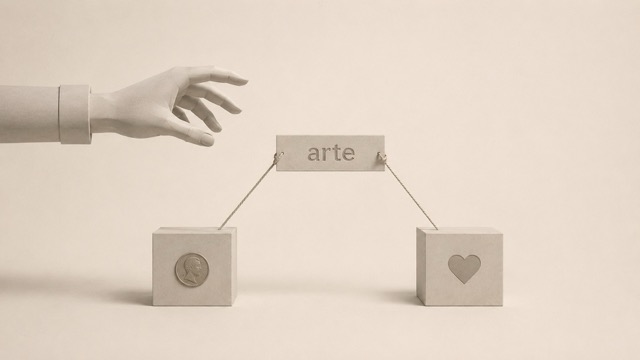
Sobre una defensa del arte que en realidad defiende otras dos cosas Una columna reciente en El País, firmada por Jordi Labanda, se titula “Contra el arte automático” y resume su tesis en una línea: un algoritmo no pinta porque no soporta existir, ni existe porque tenga miedo a la muerte, ni compone porque alguien…
-
Art that no human would see
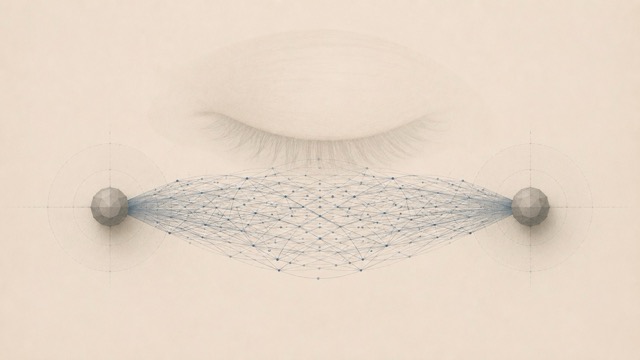
Why art between machines is a theoretical problem rather than a technical one. Suppose a system that generates forms and another that evaluates them, transforms them and returns something, and so on in a closed loop, without any human observing, neither before, during, nor after. Would there be art in that? The question appears to be one of science…
-
Data fabrication
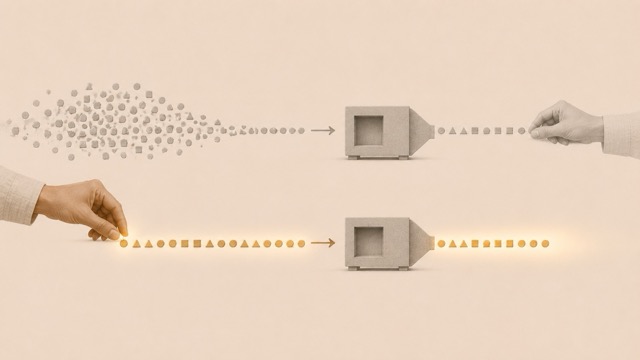
When the surplus lies not in the output, but in the substrate. In the preceding text, I argued that the artist working with massive datasets does not produce the content nor execute the form: they modulate. They determine the threshold, the friction, the taxonomy, the rule. The work was an operation upon an external flow…
-
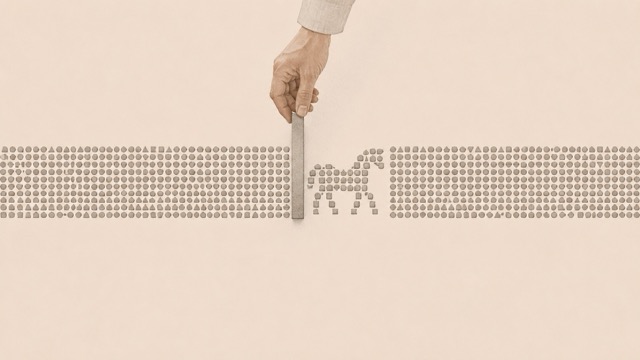
What the artist does when they no longer make the work
The human surplus in the data-generation-work chain. There is a question that data art renders inevitable, which theory has yet to answer with precision. When the material of the work is a massive dataset that the artist has not produced—telemetry from a particle accelerator, sleep logs,...
-
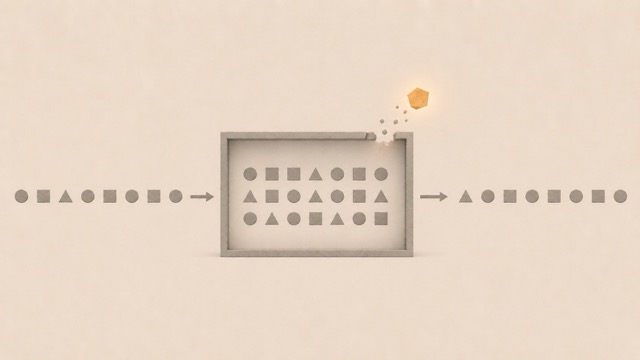
AI art requires no author (nor does it require Gell)
A position on the emerging debate. A debate has been circling itself for three years, and in recent months has begun to find a partial resolution. I intend to explain why this is a partial resolution, and propose what I consider to be a complete one. The debate is as follows:…
-
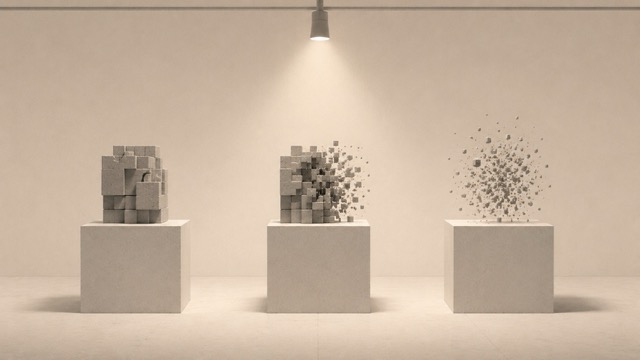
Curating that which is never the same twice
The curatorial problem of generative art. A gesture defines the profession of the curator: deciding what is hung, where, under what light, next to what, and for how long. That gesture presupposes something so obvious it is rarely articulated: that an object exists. A thing that is there, identical to itself, and which…