
Category: Investigación
-

The empty chair
On 7 July, The New York Times published a report with a headline that sounds like retribution: the revenge of the philosophy graduates. Artificial intelligence laboratories are hiring philosophers. Not as an ornamental gesture: Google DeepMind and Anthropic each have at least half a dozen, there is a constitution of twenty-three thousand…
-

Cooling the room, warming the world
On the paradox of preserving art on a warming planet, and who can afford it. Imagine the perfect room. Twenty-one degrees, fifty per cent relative humidity, without a single fluctuation. The work hangs in ideal conditions, protected from light, from dust, from time. For decades, that stability was the unquestionable ideal of the…
-
The festival that does not fit in the frame
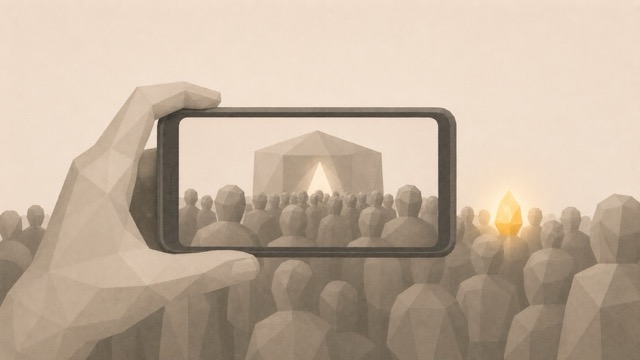
On experience converted into content, and the rest that escapes it. There is a question that the cultural industry has already answered without formulating it: the contemporary festival is not designed solely to be experienced, but to circulate. Recent research states this bluntly. The consumer of experiences seeks, beyond the moment, shareable narrative material…
-
The author that the law needs
Second movement on origin: what the law truly seeks when it seeks an author. In a previous text, I maintained that we have a cultural obsession with origin: we want to know where a work comes from, through whose hand it passed, what process produced it, as if its value depended on the purity of its provenance. That text…
-
The hand signing the file
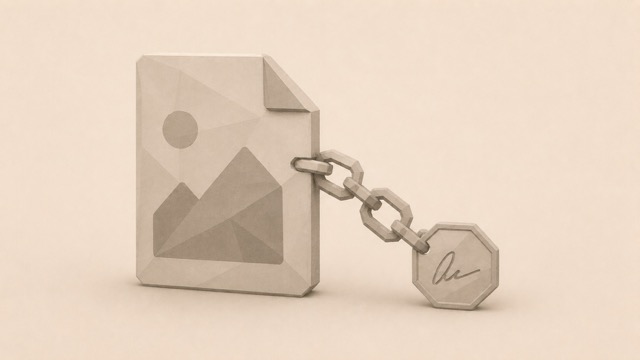
When authenticity ceases to be a judgement and becomes signed metadata. In a previous text, I maintained that in the age of AI-driven suspicion, the value of the handmade shifts from the surface of the image to its provenance: it is not the hand that holds more value, but the hand that...
-

Declaring to avoid debate
On the declaration of 'Bien de Interés Cultural' as a device, regarding Extremadura. There is a silent way to win an argument: to make it impossible to discuss. Not through prohibition or censorship, but through a more elegant gesture: elevating the object in dispute to a category that places it above debate. In…
-
The Credible Hand
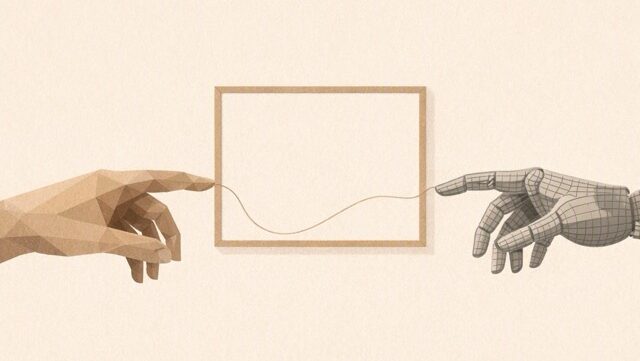
What happens to the value of the handmade when the first thing we ask before an image is where it came from. For centuries, the value of a work was discussed by looking at it. One could disagree on the result, but the question operated on something present: this is what there is, let us judge it. The era of…
-
The obsession with origin
What the Thaler case fails to perceive, and what Europe is beginning to examine. In March 2025, a United States court of appeals—the D.C. Circuit—established that United States copyright requires human authorship: a work generated without a human author is not registrable. In March 2026, the Supreme Court declined to review...
-
What the system renders improbable
On ignorance as a product of digital infrastructures There is a comfortable idea about information that should be dismantled: that we live surrounded by it, that the problem of our era is excess, that there has never been so much available to anyone. It is half true, and the missing half is the...
-

How a world chooses what it observes
Introducing a series on regimes of relevance. Over the past few days, I have published a series of five texts in this public notebook without prior announcement. This silence was intentional; I preferred the collection to be complete before presenting it, allowing for the entire trajectory to be offered rather than five separate notifications. Here it is,...