
What the Thaler case overlooks, and what Europe is beginning to consider
In March 2025, a United States court of appeals—the D.C. Circuit—established that US copyright requires human authorship: a work generated without a human author is not registrable. In March 2026, the Supreme Court declined to review the case, leaving that criterion in force without ruling on the merits. The case is known as Thaler v. Perlmutter, named after the individual who attempted to register as a work an image generated autonomously by a system he had built himself.
The immediate interpretation is the convenient one: 'the law states that AI cannot be an author'. This is true, yet it is the least compelling aspect of the matter. The significance lies not in the verdict, but in what that verdict reveals regarding how the law—and, by extension, a substantial portion of our culture—continues to conceptualise art. For the Thaler case does not resolve a question: it evades it, clinging to a category that no longer describes current reality.
1. Resolving by inertia
It is essential to clarify the precise actions of the United States legal system. The Supreme Court did not rule that AI is incapable of creating art. It did not pronounce judgment on the merits. It declined to review the case, and in doing so, it allowed the interpretation of a lower court to stand. In other words, the most critical question concerning art and authorship in our era has been resolved, for the time being, by structural default—by the inertia of an inherited category—rather than by a foundational decision that rethinks the subject.
This is more revealing than any explicit ruling. The law is not actively defending human authorship after weighing the alternative. It clings to it because it is the only category it knows how to manage. Copyright was designed for a world where every work possessed an identifiable origin: an author, a moment, an intention. It functions by assigning ownership to that origin. And when a process emerges that produces form without a singular human origin—where the 'author' is distributed across datasets of millions of third-party works, model architectures, training parameters, and a prompt—the system is at a loss. Consequently, it does the only thing its design permits: it demands a human origin, and if it fails to find one, it denies protection.
The law protects the concept of origin because it cannot manage processes devoid of one. This is not a thesis on AI. It is a thesis on the limitations of a category we have taken for granted as universal for centuries.
2. The interesting question is not being asked in the United States
Europe proposes something distinct and more fertile.
Europe has not created a new rule granting authorship to machines either—Parliament itself acknowledges that the EU lacks specific rules regarding the copyrightability of AI-generated work, and the requirement for human creativity remains robust. However, the core of the European debate does not reside in the output, or who signs the work. It resides in the input: in how the training of models is governed.
The AI Act imposes transparency obligations, a copyright compliance policy, and a public summary of training content on providers of general-purpose models. On 10 July 2025, the Commission published the final version of the code of practice for these models, and on 24 July, the official template for summarising that content. The foundation remains the 2019 Directive on the Digital Single Market, which introduced text and data mining exceptions with the possibility for rights holders to reserve their rights. On 10 March 2026, the European Parliament approved the resolution 'Copyright and generative artificial intelligence', which declares the current framework insufficient and calls for transparency, fair remuneration, and control for rights holders over the material used for training.
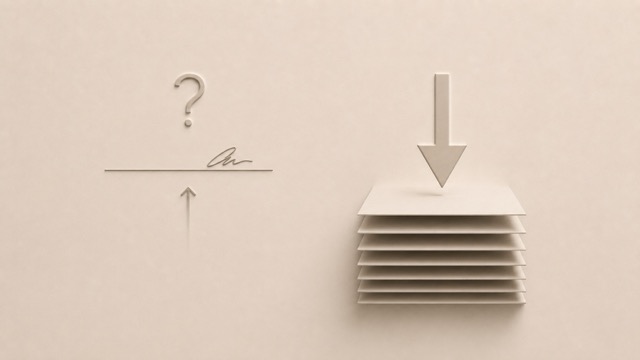
The American question is: who is the author of this? The European question is: what was utilised to produce this, can it be determined, and who should be remunerated for it? One examines the origin of the work. The other examines the material infrastructure of the training: what was ingested, whether it is traceable, whether consent was obtained, and how value is distributed.
3. From origin to infrastructure
This distinction aligns with a shift advocated in my work.
The question of origin—who created the work—is the anthropocentric question par excellence: it assumes that the value and meaning of a work emanate from a subject situated at its inception. It is the same question that underpins copyright, the romantic theory of art, and much of the common sense surrounding creation. And it is the question that AI renders obsolete, not because it answers it incorrectly, but because it reveals that it never accurately described what was occurring. Art has always been more relational, more distributed, and more indebted to what preceded it than the figure of the sole author allowed us to perceive. AI does not dismantle authorship: it reveals that we have spent centuries pretending that the origin was clear.
What it brings to the table is the question that truly describes what is occurring: not where the work originates, but upon what prior mass of works, styles, and data it has been constructed, and under what regime that mass is captured. A generative model is trained on an accumulated cultural surplus—millions of images, texts, and forms produced by countless individuals over time, which were already circulating without a clear owner. The European regulatory battle is, at its core, a battle to render this extraction legible and governable: to trace what was used, to allow for the reservation of rights, and to distribute value.
I do not take a position on the specific regulatory solution—it is an ongoing legal and political debate, with valid arguments on multiple sides. What I am highlighting is the shift in the question. While the United States debates whether there is a human author at the origin, Europe is beginning to debate how to govern a production that no longer has a unique origin, but rather an infrastructure of appropriation of the common. And that second question is the one that truly corresponds to what AI is: not a machine that creates from nothing, but a system that reorganises a surplus that was already present.
4. What this demands of art theory
If the law is slow to relinquish the category of origin, art theory need not accompany it in that delay.
The lesson of the Thaler-Europe contrast, for the purpose of contemplating art, is that the question 'who created it?' has ceased to be the decisive one. Not because the author is disappearing—artists, decisions, and responsibility remain—but because the artistic event was never solely located at the origin. It was, and is, in what a work reorganises, and in the infrastructure that permits or prevents that reorganisation from occurring, circulating, and being recognised. A theory of art commensurate with AI is not one that decides whether the machine is an author. It is one that ceases to seek meaning at the starting point and seeks it where it is truly produced: in the field of relations—technical, cultural, economic—where something, regardless of its origin, alters what was previously possible.
El caso Thaler cerrará en falso mientras la pregunta sea por el origen. Europa, sin pretenderlo, señala hacia otro sitio: hacia la infraestructura. Y ahí, no en la firma del autor, es donde conviene mirar.
This notebook remains open to anyone who wishes to discuss it.
Sources
Thaler v. Perlmutter, No. 23-5233 (D.C. Circuit), judgment of 18 March 2025 (human authorship requirement for copyright). And denial of certiorari by the US Supreme Court (No. 25-449), 2 March 2026, which leaves the criterion in effect without ruling on the merits.
European Union. Regulation (EU) 2024/1689 (AI Act): transparency obligations and training content summary for general-purpose models. European Commission: final version of the code of practice for GPAI (10 July 2025) and training content summary template (24 July 2025).
Directive (EU) 2019/790 on copyright in the Digital Single Market: exceptions for text and data mining and reservation of rights. https://eur-lex.europa.eu/eli/dir/2019/790/oj
European Parliament. Resolution of 10 March 2026, “Copyright and generative artificial intelligence – opportunities and challenges” (2025/2058(INI), P10_TA(2026)0066): insufficiency of the current framework, transparency, remuneration, and control for rights holders.
Esteban Ruiz, J. A. Who trains the world and The price of the model. Public notebook at juanesteban.art, 2026.
Esteban Ruiz, J. A. Art as Structural Surplus: Toward a Relational Ontology Beyond Human Authorship. PhilArchive and Zenodo, 2026.