
On cultural labour within the generative AI apparatus
En 2019, la antropóloga Mary L. Gray formuló una hipótesis que ha envejecido bien y mal a la vez. Su libro Ghost Work, escrito con Siddharth Suri, describía la economía oculta de microtrabajadores que clasifican imágenes, moderan contenido y etiquetan datos para que los sistemas de inteligencia artificial parezcan funcionar solos. Gray advirtió entonces que esa lógica podía extenderse hacia el resto del trabajo intelectual: lo que llamó la posible «uberización» del trabajo cognitivo, una fragmentación del oficio en microtareas precarias bajo demanda.
Six years later, the citation circulates frequently in discussions regarding generative AI and cultural work. I use it here as a starting point, not as a conclusion. My thesis is that Gray saw something important but could not yet see the decisive factor: what is occurring in 2025-2026 with cultural work under the pressure of generative AI is not merely uberisation. It is something structurally more severe: the systematic displacement of value from those who produce work to those who design, fund, and operate the infrastructures that process, generate, and distribute it.
The distinction is significant because it shifts the locus of control. It connects directly to the line of reasoning I have been developing in this public notebook: in 'Mass Technology and Ethical Consumption', I argued that responsibility for digital sustainability is infrastructural, not individual; in 'When the Frame Paints the Picture', I demonstrated how institutional infrastructure produces the artistic experience rather than merely influencing it. This text extends the same logic to cultural production itself. The question is not whether creators should use less generative AI. It is who is designing the infrastructures that reconfigure cultural production, under what conditions, and with what consequences.
1. What Gray saw, what she could not yet see
Ghost Work describió con precisión un fenómeno que en 2019 era visible sobre todo en la economía de datos: la transformación de tareas complejas en microtareas estandarizadas, ejecutadas por trabajadores fragmentados geográficamente, mal pagados, sin protección laboral, contractualmente clasificados como «contratistas independientes» pese a operar bajo control algorítmico. Amazon Mechanical Turk, los moderadores de contenido subcontratados en Filipinas o Kenia, los anotadores que entrenan modelos de visión computacional. Gray vio esto, lo nombró, y advirtió que la lógica podía expandirse hacia trabajos antes considerados profesiones intelectuales completas.
Her intuition was correct and necessary. However, the empirical landscape of 2019 differed from the current one in at least three dimensions.
First. In 2019, mass-market generative AI did not yet exist in a full sense. GPT-2 had appeared that year, but its use was marginal; DALL-E arrived in 2021, Midjourney in 2022, Stable Diffusion in 2022, ChatGPT in November 2022. Gray's question operated upon the data work that fuelled the models. Today's question operates upon the cultural work that the models imitate, replace, or displace.
Segunda. El sujeto de la «uberización» en Gray era el microtrabajador invisible. El sujeto del fenómeno actual es el creador profesional plenamente visible: el ilustrador, el músico, el guionista, el traductor, el diseñador, el fotógrafo. No estamos hablando de trabajo invisible que se hace visible al describirlo, como en Ghost Work. Estamos hablando de trabajo previamente reconocido, profesional, articulado en oficios con historia, que está siendo reorganizado por una infraestructura nueva.
Third. In the data economy described by Gray, the micro-fragmented worker at least received payment for the task. Insufficient, precarious, without rights, but payment nonetheless. In the current regime of generative AI, the creators whose work trains the models receive no payment whatsoever for that contribution, save for marginal initiatives such as the Shutterstock Contributor Fund, to which I shall return later.
Uberisation was a useful metaphor for describing a partial transformation of intellectual labour. It is an incomplete metaphor for describing what is occurring now. And the difference between partial and incomplete matters: a partial metaphor illuminates; an incomplete metaphor can obscure the central problem behind the part it does describe well.
2. What the 2024-2025 data demonstrates
Empirical evidence regarding generative AI in the cultural sector has multiplied rapidly. Four recent studies allow us to view the phenomenon with a certain clarity.
Productividad y homogeneización. Zhou y Lee (2024), en un estudio sobre cuatro millones de obras digitales publicadas en plataformas online, encontraron que los artistas que adoptan IA generativa producen aproximadamente un 25% más obras y reciben un 50% más de «favoritos» por obra. Pero el mismo estudio señaló algo menos comentado: la novedad media de los contenidos producidos con asistencia de IA desciende. Las obras tienden a parecerse más entre sí, aunque la «novedad pico» —las ideas más exploratorias dentro del conjunto— aumenta. Es un patrón clásico de optimización: más output, mayor reconocimiento algorítmico, menor diferenciación. La distribución del valor se concentra en el extremo superior; la media se aplana.
Projected decline in revenue in specific sectors. The International Confederation of Societies of Authors and Composers (CISAC), in its 2024 global economic study, projected that music creators' revenues could fall by approximately 24% by 2028 due to progressive substitution by AI-generated content. For audiovisual creators, the projected decline is 21%. The same report estimates that the global market for AI-generated content will grow from approximately 3 billion euros in 2024 to 64 billion in 2028. This is a transfer of magnitude unprecedented in the cultural sector: the money does not disappear, it is redistributed. It leaves the pockets of creators and enters the balance sheets of technology platforms.
Precariedad estructural preexistente. El estudio Cultural Freelancers UK (2024), realizado en el Reino Unido, encontró que el 73% de los freelancers culturales ganan menos de 25.000 libras anuales. El 60% no está afiliado a ningún sindicato. Muchos trabajan horas no remuneradas para completar proyectos y reportan «paredes de ingresos» a media carrera: estancamiento económico pese a la experiencia acumulada. Estos datos importan porque indican que la presión de la IA generativa cae sobre un sector cultural que ya operaba bajo condiciones de precariedad estructural sostenida. La IA no inaugura el problema. Lo intensifica sobre una base ya frágil.
Mass adoption with explicit reservations. The 2025 Adobe report, based on a survey of 16,000 creators worldwide, found that 86% actively use generative AI in their work, 76% state that it has accelerated the growth of their professional activity, and 81% use AI to generate texts or content they could not previously produce. Simultaneously, 69% express explicit concern regarding the unauthorised use of their own work in training. Adoption is mass-scale and, at the same time, profoundly ambivalent: creators use the tool because they can, and distrust it because they know.
Estos cuatro hallazgos no son piezas sueltas. Forman patrón. La IA generativa eleva la productividad inmediata del creador individual al tiempo que homogeneiza el resultado agregado, proyecta caídas significativas de ingreso sectorial sobre una base laboral ya precarizada, y produce adopción masiva entre profesionales que simultáneamente desconfían de las condiciones de su propio uso. El patrón no es «trabajadores fragmentados haciendo microtareas». Es algo distinto, y merece nombre propio.
3. Why “uberisation” falls short
The Uber metaphor functioned because it captured three features: the precarisation of a previously stable trade, algorithmic control over labour, and the shifting of risk from the company to the worker classified as self-employed. Applied to cultural labour under generative AI, the metaphor partially illuminates those three features. But it leaves out the decisive factor.
Uber, after all, pays the driver per trip. Its business model extracts rent—commission on every journey, control over fares, shifting of operating costs to the worker—but the driver receives income for each concrete act of labour. The relationship of exploitation is dense, asymmetric, problematic. But there is a transaction.
Within the generative AI regime operating across the cultural sector, this does not occur. Creators whose work trains generative models are not consulted, do not sign contracts, and do not receive payment. Their work is assimilated by the model during training and subsequently reproduced, reorganised, or stylistically imitated by the infrastructure without any form of compensation. Extraction does not operate through asymmetric transaction: it operates through silent incorporation.
El caso de Shutterstock ilustra esto con precisión cruel. La plataforma lanzó en 2023 un «Contributor Fund» para compensar a los fotógrafos cuyas imágenes habían entrenado sus modelos generativos. La iniciativa fue presentada como respuesta ética al problema de la apropiación. Un análisis publicado en PetaPixel en julio de 2023 estimó que el pago medio por imagen utilizada en entrenamiento fue de aproximadamente 0,0078 dólares; la mediana, alrededor de 0,0069 dólares. Una imagen profesional cuya licencia comercial costaría decenas o cientos de dólares al usuario final fue compensada al autor con menos de un céntimo. La empresa, mientras tanto, mantenía ingresos netos anuales del orden de 32 millones de dólares.
This is not uberisation. It is something more radical. Uber at least pretends to be an employer. Generative AI platforms pretend nothing: they simply operate upon existing cultural raw material as if it were a public resource, while the resulting product is the private property of the platform. It is silent dispossession with a veneer of symbolic compensatory funding.
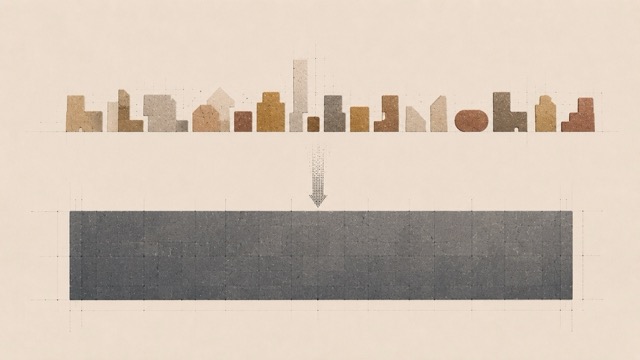
Here it is appropriate to introduce a distinction that the Uber metaphor does not allow one to formulate. What is occurring is not so much the fragmentation of labour—which did occur in the Ghost Work scenario—as the displacement of value. These are two distinct phenomena. Fragmentation describes how the task is reorganised. Displacement describes who captures the rent that the task generates. They may coexist, but their logic is different, and the lever for intervention is different.
4. The displacement of value as a structural problem
I term the displacement of value the process by which the economic and symbolic rent generated by cultural production is transferred from those who produce the work to those who operate the infrastructures that process it. This is not a new process: the art market has always distributed value asymmetrically between creators, intermediaries, and platforms. What changes with generative AI is the magnitude, the speed, and, above all, the opacity of the displacement.
Magnitude. The CISAC figures already cited—a projected 24% drop in musical income, the transfer of tens of billions of euros from the creative sector to the technology sector—are of an order of magnitude the cultural system has not previously experienced in such short timeframes. We are not discussing the loss of jobs in a sub-industry. We are discussing the structural reallocation of value across the entire cultural chain.
Velocity. The habitual transition between technical regimes of cultural work—from painting to the industrial workshop, from the workshop to photography, from photography to cinema, from cinema to digital—has historically been measured in decades. The transition currently occurring is measured in months. This is significant because the speed of change prevents the collective articulation of a response. Trade unions, professional associations, legal frameworks, and institutional practices operate on long timescales. The infrastructure is transforming faster than the sector can organise to discuss it.
Opacity. Unlike the traditional art market—which is opaque yet documentable—the infrastructure of generative AI is structurally opaque by design. We do not know precisely which images trained Midjourney. We do not know what proportion of a specific author's work was processed. We do not know how the weights are distributed. We do not know what implicit curatorial selection decisions the training teams applied. The developers themselves, in many cases, could not answer these questions with precision. Opacity is not accidental: it is an operational condition of the system.
This displacement of value also operates on two distinct planes that should be separated.
Economic level. That which the figures from CISAC, Shutterstock, and Adobe document. Income that leaves the pockets of creators and enters those of the platforms. Here, the problem is accounting-based and, in principle, susceptible to intervention via mandatory licensing, significant compensatory funds, and specific remuneration rights. The European Union has begun to debate these avenues in the context of the AI Act and the update to the copyright directive. The European Parliament, in a report from July 2025, has indicated that the mass training of generative models on protected work often violates current legal exceptions and demands new frameworks. It is regulatory slowness, yet at least there is an institutional diagnosis.
Symbolic and ontological plane. This is more difficult to name and, therefore, to regulate. What generative AI displaces is not merely the creator's income, but something more structural: the regime of attributing cultural value to human production. When a tool can generate one thousand images in an artist's style in a single day, the style ceases to function as a mark of singularity and begins to operate as a technical filter. When a system can compose a song that reasonably passes for that of a recognised composer, the composition ceases to be an index of a human process and begins to be one among many possible outputs. This connects with my argument in When the Frame Paints the Picture: it is not that the work changes because of the tool; it is that the interpretive frame changes and, with it, what the work can signify within the cultural system.
This is where the Uber metaphor becomes not only incomplete but misleading. Uber does not transform the nature of the journey: going from point A to B remains what it was. Generative AI, regarding cultural production, does transform the nature of the work. It is not just that the illustrator earns less: it is that the craft of illustrating is reconfigured in its very definition.
5. The infrastructural question
If the problem is the displacement of value, and not the fragmentation of labour, then the levers for intervention lie elsewhere. The question is not how to protect the individual creator from the competitive pressure of generative AI. The question is how to intervene in the design of the infrastructures that produce that displacement.
Esto es exactamente la misma lógica que sostuve en Tecnología de masas y consumo ético: la responsabilidad por las consecuencias sociales de las infraestructuras digitales no es asunto individual de los usuarios, sino asunto colectivo de diseño, modelo de negocio y regulación. El error categorial es el mismo aquí: pedir al ilustrador, al músico o al traductor que «adapte su práctica al nuevo contexto» es trasladar al lado más débil de la cadena una responsabilidad que pertenece estructuralmente a quienes operan la infraestructura.
There are three identifiable levels of infrastructural intervention.
Design of the models themselves. Who decides which data trains the model, in what proportions, with what rules of exclusion and consent. Today this is decided internally at each company, without transparency or specific regulation. A responsible infrastructure would require, at a minimum: mandatory transparency regarding training datasets, effective opt-out mechanisms, systems of significant—not symbolic—compensation for creators whose work trains commercial models, and traceability regarding the influence of specific works on specific outputs. None of this exists today in a generalised form.
Business model. When the business of generative AI is to generate content that substitutes for prior work, capturing rent that previously circulated through the cultural sector, the structural incentive pushes to expand the displacement of value. As long as this does not change—and it will not change through the platforms' own initiative—the marginal technical improvements of the system will only intensify the problem. Regulation would need to intervene here: mandatory collective licensing, remuneration rights associated with the use of work in training, and sectoral funds financed by the platforms themselves in proportion to their revenue.
Marcos jurídicos. Tres dinámicas merecen atención específica. Primero, el régimen de copyright aplicado al entrenamiento de modelos: la excepción de «minería de textos y datos» prevista en algunas legislaciones europeas fue diseñada para investigación académica y se está aplicando, problemáticamente, a explotación comercial masiva. Segundo, los regímenes de transparencia: el AI Act europeo introduce obligaciones de transparencia para modelos generativos, pero su implementación efectiva está aún por demostrarse. Tercero, los derechos culturales colectivos: la UNESCO ha llamado la atención sobre la «desposesión cultural» que puede operar cuando datos culturales locales son extraídos sin consentimiento por modelos entrenados en otros contextos. Las tres dinámicas requieren marcos jurídicos que no existen aún, o que existen de forma fragmentaria y desigual entre jurisdicciones.
Infrastructural intervention is not a substitute for the individual commitment of creators. It is the condition for that commitment to have effect. Asking individual creators to refuse to use generative AI or to negotiate individually with massive platforms is to ask them to bear, alone, a problem whose scale entirely exceeds the capacity for individual response.
6. What this is not
It is prudent to be explicit regarding three interpretations I reject, as they would weaken the argument if they were confused with it.
I am not arguing that generative AI is, in itself, a problem. The tool is ambivalent. It can operate as a legitimate amplifier of the creative practice of those who use it with awareness, it can facilitate formal exploration, and it can produce reorganisations of the field of possible configurations that satisfy the criteria of structural surplus I defended in Art as Structural Surplus. The problem is not the existence of the technology. The problem is the infrastructure that operates it and the conditions under which that infrastructure has been designed and deployed.
I am not maintaining nostalgia for a previous regime. The art market prior to generative AI also operated on displacements of value: gallery commissions, intermediary margins, and asymmetric distribution of rent between creator and structure. The difference is one of magnitude and speed, not of absolute nature. Returning to a previous state is neither an option nor an objective. The question is how the transition is designed.
I am not suggesting that creators lack agency. Criticising the individualism of responsibility does not imply denying that creators can organise, negotiate collectively, lobby for regulation, or articulate coordinated sectoral responses. In fact, the only realistic path for intervention lies in such collective organisation. What I criticise is the individual attribution of moral burden, not the possibility of collective action. These are distinct matters.
7. An observation on the Global South and the deepening divides
There is one aspect of the problem that the majority of the reviewed studies touch upon only in passing and which deserves to be underscored. The vast majority of generative models available today have been trained predominantly on work produced in Western contexts, in majority languages—especially English—and within hegemonic aesthetic traditions. The UNESCO report on AI and culture (2025) draws attention to this asymmetry: generative AI may exacerbate the cultural divide between the Global North and South, not only because it concentrates economic rent in predominantly American firms, but because it reproduces and amplifies a specific aesthetic canon as if it were neutral.
Studies on Midjourney outputs show significant demographic biases: only 23% of the people represented are women, and only 9% are people of African descent. These figures do not reflect the actual population distribution. They reflect the composition of the training corpus, which privileges certain types of work, certain aesthetics, and certain representations over others.
Applied to the displacement of cultural value, this means that the problem is not only distributive in economic terms. It is also distributive in symbolic and geographic terms. Cultural traditions underrepresented in training data will appear underrepresented in outputs, and creators working within those traditions will be doubly disadvantaged: lower visibility in the dominant generative market, and lower capacity for regulatory pressure on platforms, which operate from jurisdictions far from their own.
Any serious response to the problem of cultural work under generative AI must incorporate this dimension. Not as an additional clause, but as a structural part of the diagnosis.
8. Conclusion
Three conclusions are derived from the analysis.
The first is descriptive. What is occurring with cultural labour under the pressure of generative AI is not well described as the uberisation of intellectual labour. Mary L. Gray's metaphor was precise for 2019, when the visible phenomenon was the fragmentation of data work into micro-tasks. In 2025-2026, what is occurring is structurally distinct: massive displacement of value, both economic and symbolic, from those who produce work to those who operate the infrastructures that process it. The distinction matters because it changes the diagnosis and, consequently, the potential responses.
La segunda es metodológica. La pregunta «¿cómo deben adaptarse los creadores al nuevo contexto?» está mal planteada. Trasladar al individuo la responsabilidad de un fenómeno cuya escala es estructural produce el mismo error categorial que ya identifiqué en el caso de la sostenibilidad digital: confundir la palanca aparente con la palanca real. La palanca real está en el diseño de las infraestructuras, en los modelos de negocio que las sostienen, y en los marcos regulatorios que podrían orientarlas. No en la conducta del ilustrador o del músico individual.
La tercera es ética. La responsabilidad por las consecuencias del despliegue actual de la IA generativa en el sector cultural no es del creador que decide usarla, ni del creador que decide no usarla. Es de quienes diseñan los modelos, financian su entrenamiento, capturan la renta resultante y operan sin obligación efectiva de transparencia, consentimiento o compensación significativa. Mientras la conversación pública siga centrada en si los creadores individuales están «adaptándose bien» a la IA, las decisiones que de verdad mueven la aguja —cómo se entrenan los modelos, quién recibe la renta, qué regulación se aprueba, cómo se distribuye internacionalmente la influencia— se siguen tomando lejos del escrutinio del propio sector cultural.
The price of the model is not paid by the creators who use it. It is paid, above all, by the creators whose work trained it without their permission, and by those who will see the profession they inhabited reorganised without having participated in the design of that reorganisation. Recognising this is neither nostalgia nor technophobia. It is the prerequisite for any collective response to have meaning.
About the open conversation
This text continues a line of thought I have been developing in this public notebook regarding digital infrastructures and collective responsibility. In Mass Technology and Ethical Consumption, I argued that the sustainability of digital infrastructure is a structural matter, not an individual one. In When the Frame Paints the Picture, I demonstrated how institutional infrastructure produces the artistic experience rather than merely influencing it. Here, I extend the argument to cultural work under the pressure of generative AI. All three texts share the same underlying thesis: in contemporary digital systems, the decisive factor is not individual conduct but infrastructural design, and the ethical responsibility for its consequences is distributed in proportion to the power of those who design, fund, and operate those systems.
If anyone wishes to intervene in this conversation from the perspective of the sociology of cultural work, the political economy of culture, AI studies, cultural management studies, or their own experience as a creator in the sector, this notebook remains open.
Sources
Gray, Mary L., and Suri, Siddharth. Ghost Work: How to Stop Silicon Valley from Building a New Global Underclass. Houghton Mifflin Harcourt, 2019.
Zhou, Eric, and Lee, Dokyun. “Generative artificial intelligence, human creativity, and art”. Oxford Open Economics, 2024. https://doi.org/10.1093/ooec/odae004
CISAC (International Confederation of Societies of Authors and Composers). Global economic study shows human creators’ future at risk from generative AI, 2024. https://www.cisac.org/Newsroom/news-releases/global-economic-study-shows-human-creators-future-risk-generative-ai
Sutherland, Heather, Easton, Eliza, and Comunian, Roberta. Cultural Freelancers UK Report. University of Essex, 2024. https://repository.essex.ac.uk/41613/
Adobe. Inaugural Adobe Creators’ Toolkit Report: 86 Percent of Global Creators Use Creative Generative AI. Adobe News, October 2025. https://news.adobe.com/news/2025/10/adobe-max-2025-creators-survey
Smith, Matt Growcoot. “Shutterstock May Have Paid Out Over $4 Million From its AI Contributor Fund”. PetaPixel, July 2023. https://petapixel.com/2023/07/12/shutterstock-may-have-paid-out-over-4-million-from-its-ai-contributor-fund/
UNESCO. Report of the Independent Expert Group on Artificial Intelligence and Culture. UNESCO, 2025. https://www.unesco.org/sites/default/files/medias/fichiers/2025/09/CULTAI_Report%20of%20the%20Independent%20Expert%20Group%20on%20Artificial%20Intelligence%20and%20Culture%20(final%20online%20version)%201.pdf
European Parliament. Generative AI and Copyright: Training, Creation, Regulation. European Parliamentary Research Service, July 2025. https://www.europarl.europa.eu/thinktank/en/document/IUST_STU(2025)774095
Heigl, Rebecca, et al. “Generative artificial intelligence in creative contexts: a systematic review and future research agenda”. Management Review Quarterly, 2025. https://link.springer.com/article/10.1007/s11301-025-00494-9
Sáez-Velasco, Sonia, et al. “Analysing the Impact of Generative AI in Arts Education”. Informatics, MDPI, 2024. https://www.mdpi.com/2227-9709/11/2/37
Esteban Ruiz, J. A. Mass technology and ethical consumption. Public notebook at juanesteban.art, 2026.
Esteban Ruiz, J. A. When the frame paints the picture. Public notebook at juanesteban.art, 2026.
Esteban Ruiz, J. A. Art as Structural Surplus: Toward a Relational Ontology Beyond Human Authorship (V2.3). PhilArchive and Zenodo, 2026.
Series · Infrastructures
This piece forms part of a six-part series examining the influence of digital and cultural systems upon art. The overarching thesis posits that within contemporary systems, the decisive factor is not individual conduct but rather infrastructural design. The series commences with the capture mechanisms of these systems and concludes with their exclusionary practices.