
On 9 September 2026, the Community of Madrid declared an Immaculate Conception painted by Juan de Pareja in the 17th century an Asset of Cultural Interest. It is the highest level of protection that Spanish law affords a work: it may not leave Spain permanently, its owner must maintain it, and the administration shall have a right of first refusal if it is sold. The proceedings began in April 2025, when the Ministry of Culture denied a permit to export it.
Among the reports cited by the decree is one from the Royal Academy of Fine Arts of San Fernando. Its conclusion, verbatim, is that the quality of the painting ‘is acceptable, and for that reason the Commission does not oppose its protection as an Asset of Cultural Interest’.
Acceptable. It is rare for an institution protecting a work to do so with such a restrained adjective.
The value lies elsewhere, and the decree states as much. Pareja was, in its words, 'an enslaved person freed by Velázquez, which contributes uniqueness to the work subject to the declaration'. He was born into slavery in Andalusia, spent over two decades in Velázquez's workshop, and became a painter with his own body of work. Palomino dedicated one of the biographies in his treatise on painting to him at the beginning of the 18th century, which proves that his name was not lost.
The decree adds an important detail: the three known Immaculate Conceptions by him 'indicate his participation in the art market'. In other words, Pareja was not merely a master's assistant. He painted to sell, and he did sell. The work now being protected is, among other things, evidence of a profession practised in freedom.
The primary source of information regarding Pareja, it states, derives from his involvement in documented legal acts linked to the affairs of Velázquez, 'his master and former owner'. What we know of him has reached us, above all, through the papers of the person who owned him.
It is a paradox. The documents that recorded him as part of another's affairs are today those that allow his life to be reconstructed, and that life is what the decree invokes to protect his painting.
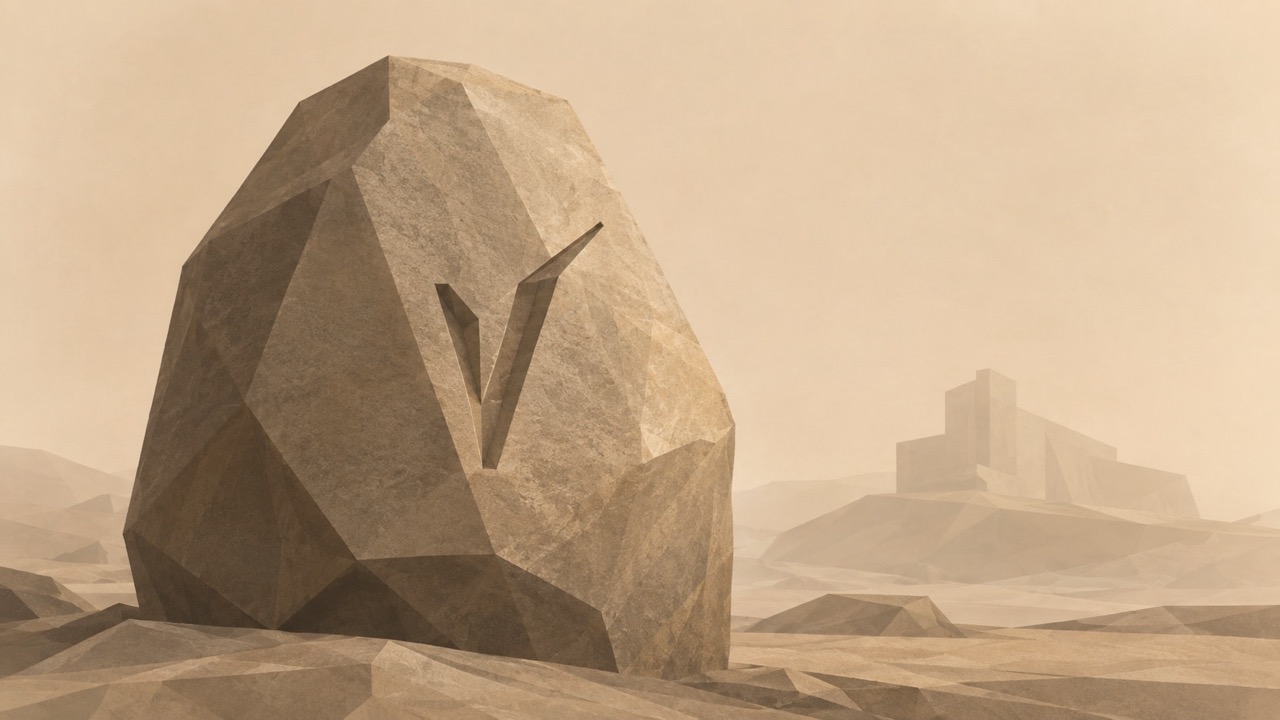
Three years ago, the Metropolitan Museum in New York dedicated its first major exhibition to Pareja, from 3 April to 16 July 2023. Its approach was different: to present him as a painter who forged his own path, close to the Madrid school of his time and distinct from the courtly sobriety of Velázquez. Among the works exhibited was "The Baptism of Christ", from the Prado, in which Pareja painted his name as if it were carved into a rock.
There is no document linking that exhibition to the request to export the Immaculate Conception two years later, and I shall not assume that one existed. What the two texts do show, when placed side by side, is that the same painter can be recognised through two avenues. One recognises him through his biography: the unique aspect is who painted it. The other, through his painting: the unique aspect is how he painted.
The first avenue is not illegitimate. The law protects works for their historical value, not merely their artistic merit, and an Asset of Cultural Interest is not an award for quality, but a decision regarding what a society wishes to preserve as a testimony. Pareja's Immaculate Conception is a first-rate testimony: that of an enslaved man who became a painter and lived by his work. Protecting it is appropriate. The reasons for its protection are equally significant, as they guide what we shall look for when we view it.
If one sees only the singularity of a biography in it, the painting returns to the place Pareja occupied for centuries, that of an appendix to someone else's history. If it is looked at as a painting, with its decisions and its craft, it is given back what his name, painted on the rock, claimed. The decree has already done the former; the latter is left to those who go to see it.
About the open conversation
This text continues the Notebook's line on how institutions recognise, protect or ignore works and authors, and on the distance between the legal reasons for a decision and what they mean for the way we look. It starts from the text of the decree and from the public documentation of the Metropolitan Museum. If you work in Golden Age art history, in studies of slavery in early modern Spain or in heritage, and can correct or add anything, this notebook remains open.
Sources
Decree 76/2026, of 9 September, of the Governing Council of the Community of Madrid, declaring the painting "Immaculate Conception" by Juan de Pareja an Asset of Cultural Interest (reproduction in Noticias Jurídicas). Published in the BOCM No. 221, of 16 September 2026.
Community of Madrid, list of movable assets of cultural interest.