
At the end of July 2026, a small craft and antique shop in Nantucket hung a wooden sign inside with the local nautical aesthetic that read: "Influencers prohibited." The photo spread across the internet and the controversy erupted. Some applauded the business; others accused it of disparaging a profession. But the sign was not what it seemed, and in the distance between what it seemed and what it was, there is something that deserves attention.
It was neither a municipal ordinance nor a regulation concerning public space: it was a sign inside a private shop. Its owner later clarified that he did not intend to prohibit anyone from entering. "Sometimes I feel that my shop is used as the background, as a stage," he explained. He added a phrase that addresses the heart of the matter: "It is a problem that we should examine as a society." What bothered him was not an identity, but a specific behaviour: people who entered to film without buying or looking at anything, who turned his premises into a set, who crowded it and, above all, who included other customers in their videos without asking for their permission. His partner put it even more clearly: do you like being filmed while you are in a shop, being included in the background of someone else's video?
The response came from a creator with her own shop on the island, and she had a point. She noted that the content economy is largely driven by women, that disparaging this profession carries a hint of the old tendency to ridicule professionals when they convert a new form of visibility into economic power, and that such a sign delegitimises real work. She did not call it discrimination exactly, but she did call it a socially accepted way of looking down on what others do. And in that, she is correct: creating content is work, and it is not lesser work for being new or for being done with a mobile phone. It must be said, because it is easy to caricature: not all creators spread misinformation, nor are they reckless, nor do they turn every site into a circus, although there are notorious cases that profit by deteriorating what they touch. To paint everyone with the same brush would be unjust and false.
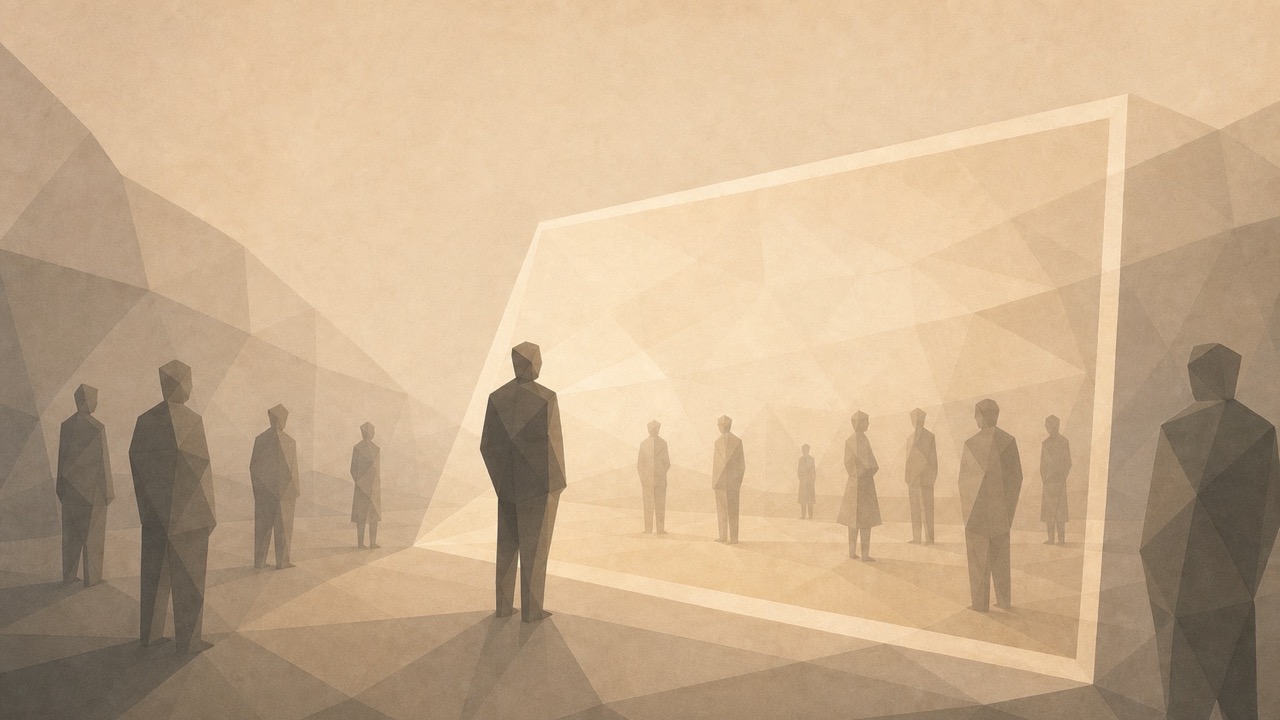
Herein lies the conflict. It is true that filming for a living is legitimate work, and disparaging it often masks a prejudice. And it is true that content production reorganises the space in which it occurs, not only for the person filming. When someone turns a shop, a street, or a square into their set, they change the place for everyone who is there without having chosen it. The other customers become involuntary extras, the background of a scene that is not their own. The person filming is working; the others, unknowingly, have become scenery. It is not a question of whether looking is purer than filming, which would be sentimental nonsense. It is a question of shared space: what happens when a common place is subordinated to the production of one person's image.
That this is real, not a shopkeeper's obsession, is recognised by a gesture that has become common in another field: mobile-free concerts. For years, musicians such as Jack White have required the audience to store their phones in a pouch that does not open until they leave, and they market it precisely as such, as "a one hundred per cent human, in-person experience." Chappelle, for example, a comedian who does the same. The reasons are varied: to prevent his new material from leaking, for business reasons, and others related to the experience; they have verified that when the venue is filled with screens filming, the attention changes, the relationship between the performer and the audience changes, and what those who have a row of raised arms with mobile phones in front of them see changes. It is not that a performance without phones is objectively better. It is that filming is not a neutral gesture that is added to the experience without affecting it: it modifies it, and it modifies the experience of everyone else.
What the Nantucket sign revealed, beyond the trivial controversy between factions, is that we do not yet have an agreement on this. We know how to regulate noise, smoke, and parking where one should not. We do not yet know what to do when the externality that one person imposes on others is to turn them into the background of their content. In a private business, the owner decides and is within their rights. In public space, it is more difficult, because two legitimate rights collide there: the right to film, which is also the right to work, and the right to be in a place without ending up, without having asked for it, within someone else's frame. I do not have the solution and I distrust anyone who offers one easily. But the problem is well posed by that fed-up shopkeeper: more and more people are tired of feeling like an extra in someone else's film. And that feeling, even if we do not yet know what to do with it, points to something that will have to be decided: how far does each person's right to turn the shared world into their set extend.
On the open conversation
This text takes a real and minor case—a 'No Influencers Allowed' sign in a Nantucket shop in July 2026—as a starting point to consider something that transcends it: what happens to a shared space when content production reorganises it for everyone, not merely for the person recording. I maintain two positions simultaneously: that creating content is legitimate work, and that recording in a common space turns others into involuntary extras. I do not prioritise looking over recording; I pose the question of who decides the legitimate use of what is shared. I intentionally exclude the debate regarding the effect of social media on the health of young people, for which the scientific evidence is far from conclusive. Should anyone wish to intervene from the perspectives of law, urban studies, or the sociology of digital culture, this notebook remains open.
Sources
The Nantucket case: 'No Influencers' sign at Four Winds Craft Guild (private shop), late July 2026; statements by John Sylvia ('a problem we should look at as a society') and response from Paige Paul (formerly Paige Lorenze). Coverage in People, TODAY, and the Connecticut Post. It was neither an ordinance nor a public prohibition.
Phone-free concerts: Jack White tour (2018), Yondr pouches, 'a phone-free, 100% human experience'; use by Dave Chappelle and others.
On image production and space: L. Siegel, I. Tussyadiah and C. Scarles, 'Cyber-physical traveler performances…', Current Issues in Tourism (2023); P. Toscano, 'Instagram-City', Visual Anthropology (2017); S. P. Smith, 'Instagram abroad', Postcolonial Studies (2018).
On the debate (not addressed in the text) regarding the effect of social media on adolescent health: National Academies of Sciences, Social Media and Adolescent Health (2024), which found no support for causal harm at a population scale; and the discussion between A. Orben, C. Odgers and J. Haidt.