
Category: Cuaderno público
-
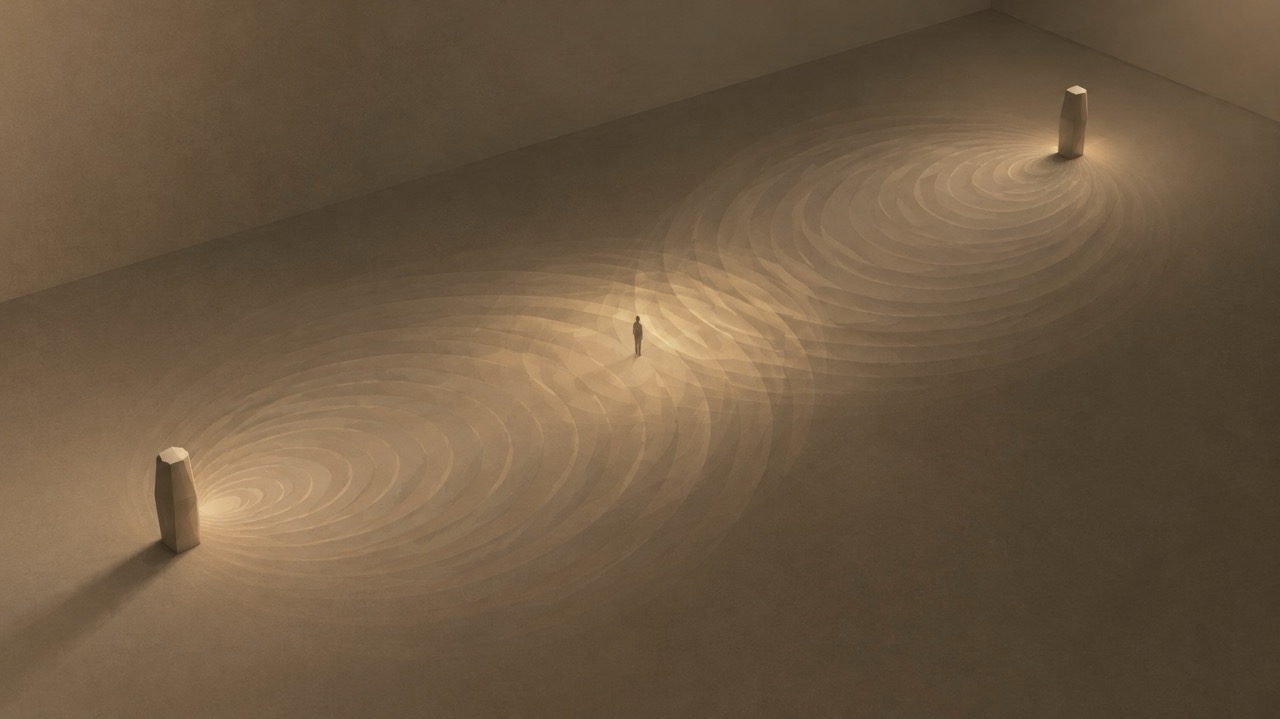
Two voices in the dark: Steve McQueen at the Guggenheim Bilbao
66–76–26 places the isolated voices of Nina Simone and David Bowie singing the same song in a dark room. The work does not offer an image to replace the experience.
-
Autonomy, not independence: a Turin collective and art outside the market
The Bastione collective moved from occupying a space in the Cavallerizza Reale in Turin to working under a temporary concession at Villa Rey. A 2025 doctoral thesis examines the limits of the 'independent' label, what the collective gained by formalising, and who pays for the work that the market does not sustain.
-
Having good taste is not creating: Kant, Duchamp and artificial intelligence
Kant distinguished between the taste that judges and the genius that produces. Duchamp chose his ready-mades regardless of good or bad taste. Artificial intelligence makes visible an older confusion between selecting references, obtaining recognition, and creating.
-

Interns on the staff
The Labour Inspectorate maintains that 207 graduates covered structural tasks for the Generalitat's Department of Culture for two years under the guise of scholarships. The case is under appeal, but the available documents allow for an examination of the boundary between training and employment in the public cultural sector.
-

When the model disappears: preserving an artwork that relies on artificial intelligence
Una obra conectada a un modelo alojado conserva su código, pero no controla la infraestructura que responde. Políticas de retirada, precedentes museísticos y un protocolo para adquirir, probar, migrar o concluir obras basadas en inteligencia artificial.
-
La Casa Invisible: nineteen years of cultural provisionality in Málaga
La Casa Invisible usa desde 2007 un inmueble municipal del centro de Málaga. Un protocolo firmado por cuatro instituciones públicas, un expediente de concesión que no llegó a formalizarse y dos sentencias favorables al Ayuntamiento no han cerrado el conflicto. La cronología documentada, el marco jurídico y el coste de diecinueve años de provisionalidad.
-

Making a living from comics in Spain: income, rates and invisible labour
El Libro Blanco del Cómic preguntó a 236 creadores por sus ingresos de 2021. El 64 % no alcanzaba el salario mínimo con lo que obtenía del cómic, un 33 % ingresaba como máximo 1.000 euros netos al año por esa actividad y el 45 % cobraba hasta 30 euros por página. Los datos describen…
-
Comics and manga: reading, drawing, publishing and working
An entry point to the new path through comics and manga on JuanEsteban.art: reading, language, learning, tools, publishing, contracts, work, sales, minors and safety.
-
Royal Decree 607/2026 and comics: what it covers for artists and what it leaves out
Royal Decree 607/2026 regulates the employment relationship of performing, audiovisual, and musical artists. It does not explicitly include illustrators or comic authors, and it regulates employment, not publishing contracts.
-
From paper to scroll: what changes when a comic page becomes a vertical reading experience
In 1995, Scott McCloud proposed treating the screen as a window rather than a page. The webtoon format is read vertically, originating from Korea. What sources say about the transition from paper to scroll, and what remains to be documented.