
In February 2017, the Metropolitan Museum of Art in New York placed more than three hundred and seventy-five thousand images from its collection online for use, sharing, and remixing without restriction. Today, that figure exceeds four hundred and ninety thousand. The Smithsonian opened in 2020 with nearly three million digital items and today surpasses five million, in both two and three dimensions. The Rijksmuseum has been gifting its public domain works in high resolution since 2013. The Art Institute of Chicago offers more than fifty thousand free images. The word that invariably accompanies these announcements is the same: democratisation. Art, at last, belongs to everyone.
It is positive news, and I celebrate it without reservation before complicating the matter. That anyone may download a Vermeer or an Egyptian sarcophagus in high resolution, use it, print it, study it or remake it, without requesting permission or paying a fee, represents a genuine advancement over the previous regime, where every reproduction required an application and often a charge. I shall not pretend that this is of no consequence. It provides much, and in the correct direction.
However, the term democratisation conceals a shift that warrants consideration, for it is not what it appears. When a museum states that it is democratising its collection, it implies that it is distributing something it previously withheld, that it is ceding power. Yet what it distributes, in reality, is the copy. Not the power. These are two distinct matters, and the difference is the subject of this text.
Let us begin with what none of these museums have done: opening their entire collection. They release what they consider to be in the public domain or that over which they can waive rights. Excluded are works still under copyright, loans, photographs subject to contract, culturally sensitive material, human remains, objects from indigenous communities, and everything they simply have not yet digitised, whether due to budget, priority, or a lack of high-quality photography. The Rijksmuseum itself formulates this with an honesty I appreciate: its archive is "as open as possible and as closed as necessary." The phrase acknowledges what the headline conceals. There is a door, and someone decides how far it opens.
And deciding how far it opens is merely the first of the controls the museum retains intact. It also decides what is digitised first and what waits for years in a storehouse. It decides the resolution: a file that allows for the study of every crack is not the same as a thumbnail that serves only to identify the work. It decides, above all, how each piece is named: which title, which author, which date, which culture, which keywords, which relationships to other works. That cataloguing, which appears to be neutral data, is an interpretation. It establishes who made what, to which tradition it belongs, how it should be searched for and found. The user receives the image freely, yes, but wrapped in a description they have not chosen and which directs how it is understood.
I am not alone in this assertion. Museology has been highlighting this for over a decade. A study on the British Museum and other British institutions concluded that the power and authority relationships inherent to the national museum continue to dominate their digital collections. Other researchers insist that the decisions regarding what is digitised, how it is classified, and what metadata is added are political decisions with political consequences. To digitise is not to copy an object and release it into the world. It is to produce a selected and structured version, and to present it as the authorised version.
Finally, there is the evidence that I find of greatest interest, as it is what is usually offered as proof that democratisation truly occurred: the usage figures. The Smithsonian reported that in its first year, 2020, its open archive had thirty-five million views and one million seven hundred thousand downloads. These are enormous, and real, numbers. But let us look at what exactly they prove. They prove that there was circulation and activity. They do not state how many distinct individuals downloaded the material, nor from which countries, nor with what income, nor with what education, nor if they were precisely the groups that were previously excluded. An archive can have millions of downloads while the vast majority come from those who already had access to art through a thousand other channels: researchers, designers, institutions, the world that was already inside. Democratisation is not that many people download the material; it is that different people do so, and the figures do not say that.
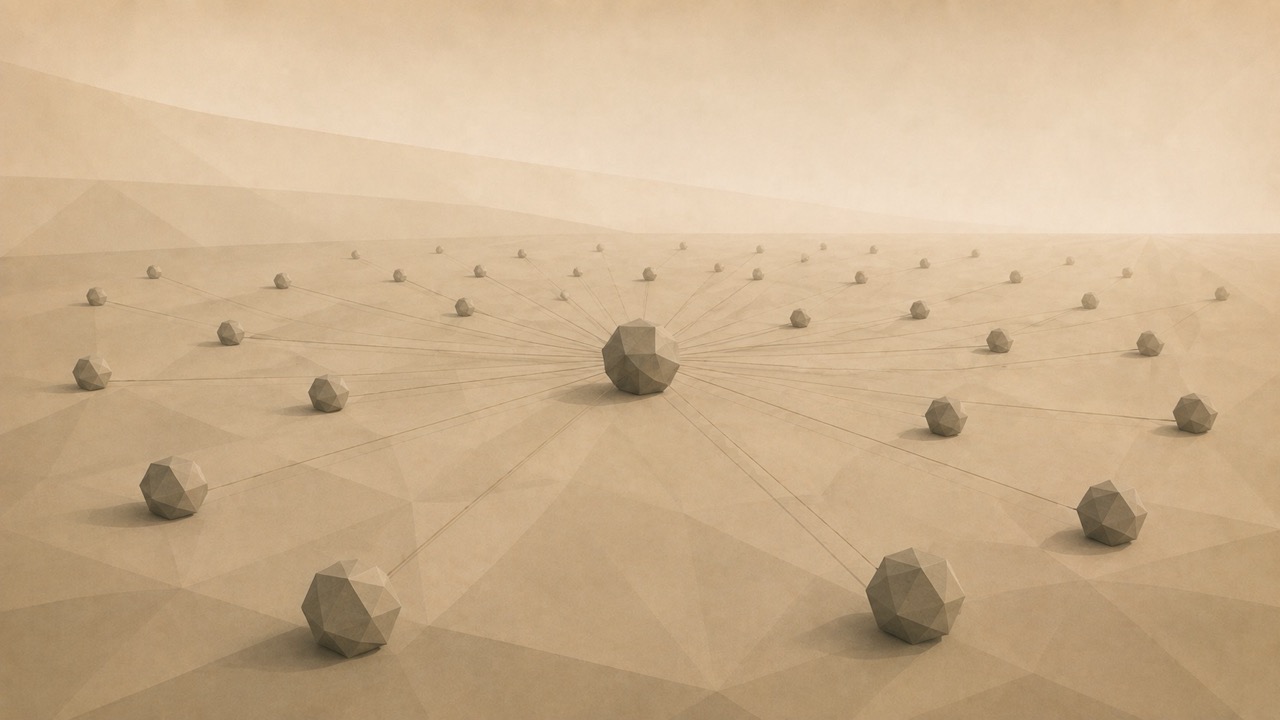
So, what truly occurs when a museum opens its archive? It does not relinquish its authority: it extends it. Previously, that authority was exercised within the building, over those who crossed the physical threshold. Now, it travels with every downloaded image, with its title, its record, its crop, its resolution, to any screen in the world. The museum's version of what each work is, what it is called, and to what it belongs becomes the default version, the one that appears first, the one that is reproduced and cited. The museum has not distributed its power to define what things are. It has made it ubiquitous. It gifts the copy and retains, now on a planetary scale, the key to its meaning.
I do not suggest that museums should close their archives; far from it: openness is a virtue that must be defended. I ask only that we do not confuse the gift with what is not being given. Possessing the image is not the same as having a voice regarding what the image claims to be. We already have the former, and that is well. The latter remains where it was. And as long as "democratisation" refers only to the copy and not the interpretation, we shall continue to celebrate being given the key to the house without noticing that it is merely the key to one room, and that the person who holds the key to the rest has not relinquished the keyring.
About the open conversation
This text begins with something I celebrate, the opening of collections by major museums, to question what exactly that opening distributes and what it preserves. I maintain, in line with recent museology, that opening access to reproductions does not, by itself, distribute the authority to decide what each work is, how it is named, and what is excluded. I distinguish between legal and technical access, which has truly grown, and effective social use and the capacity to intervene in interpretation, which are quite different. If anyone wishes to intervene from the fields of museology, collection management, digital heritage studies, or artistic practice using these archives, this notebook remains open.
Sources
The Metropolitan Museum of Art, Open Access programme (since 7 February 2017; more than 492,000 images under CC0) and announcement of 3D models (26 February 2026).
Smithsonian, Open Access (since 25 February 2020; more than 5.1 million 2D and 3D items) and first-year review (35 million views and 1.7 million downloads in 2020).
Rijksmuseum, Rijksstudio and Information and Data Policy (in force since 17 July 2024). Art Institute of Chicago and Cleveland Museum of Art, Open Access programmes.
Museo Reina Sofía, LaDigitaldelReina (selective digital access, not a comprehensive CC0 policy).
Fouseki, K. and Vacharopoulou, K., “Digital Museum Collections and Social Media” (Journal of Conservation and Museum Studies, 2013); Zaagsma, G., “Digital History and the Politics of Digitization” (Digital Scholarship in the Humanities, 2022); Arantes, P., “Museums in Dispute” (Arts, 2025).
Walsh, D., Hall, M. M., Clough, P. and Foster, J., “Characterising Online Museum Users” (2018), regarding National Museums Liverpool.
Reviewed on 27 September 2026: dates and references corrected.