
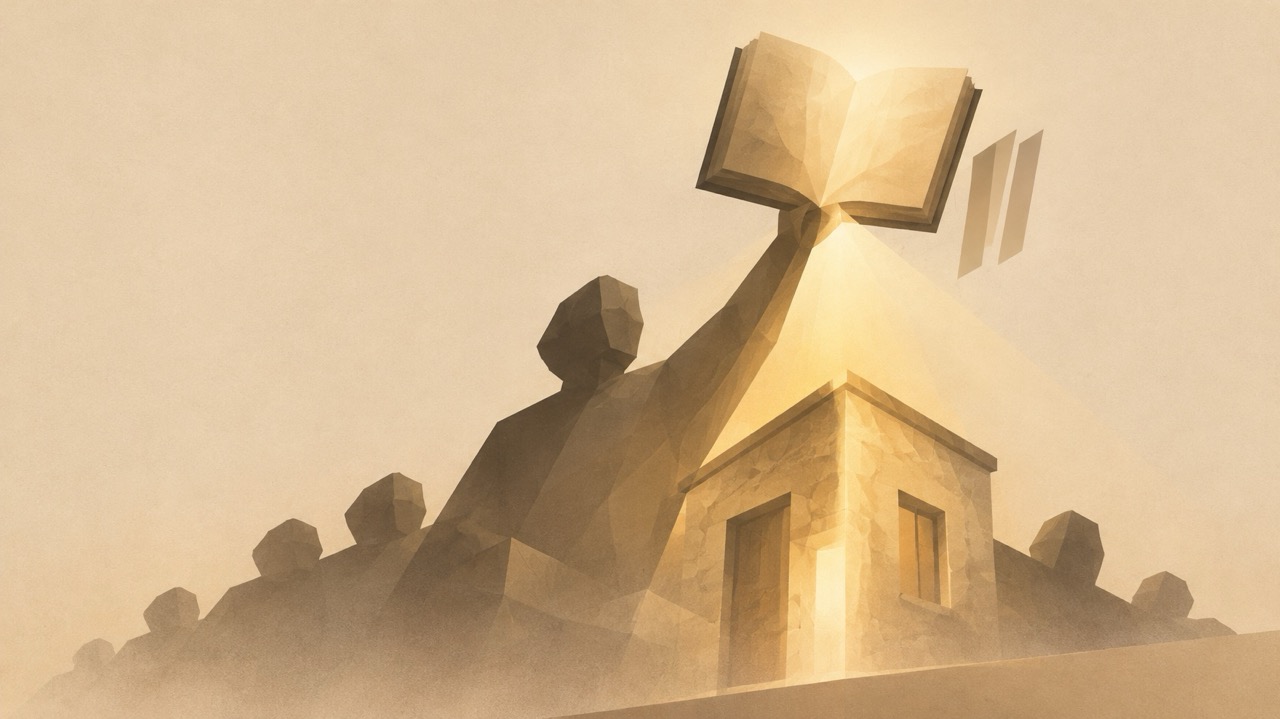
A few days ago I requested to join the '11N, culture also stops' manifesto. I did not find a public form and I have not received a response, so I do not appear among the signatures. My support does not depend on that procedure, and for that reason I leave it written here.
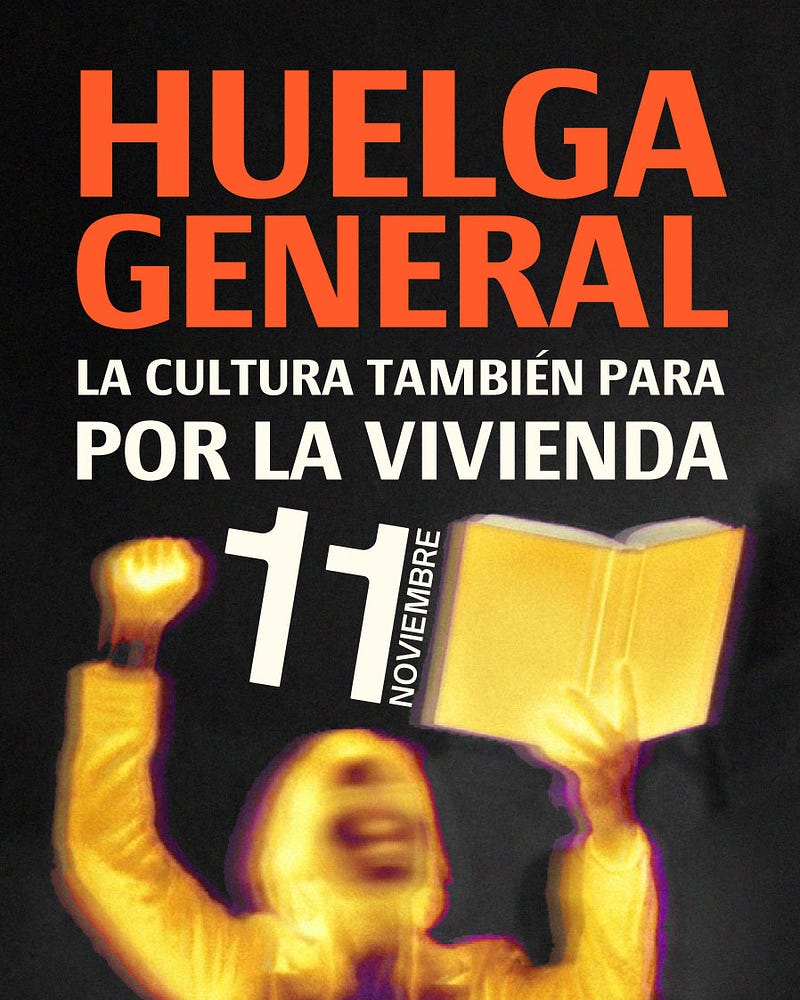
The manifesto adds the cultural sector to the general strike for housing called for Wednesday, 11 November, an initiative promoted by the Tenants' Union. It is signed, according to Público, by more than 70 publishing houses, around a hundred bookshops and some 800 people who work in culture: writers, translators, editors, booksellers, musicians, people from theatre, cinema and dance, artists, gallery owners, journalists. Its conclusion fits in one line: without a home, without premises and with public space converted into a shop window, 'there are no places left where culture lives'.
Housing determines who can create
Cultural precarity is often explained by income: low fees, intermittent commissions, and an absence of labour protection. All of this is true, and I have written about it here on more than one occasion. However, income is measured against expenditure, and the expenditure that has increased the most is that of having a place to live and a place to work.
The manifesto provides a figure that summarises this. According to a survey by the Madrid Booksellers Association, more than eight out of every ten bookshops are tenants, and only 14.3% claim to have guarantees of remaining in their premises. The same applies to the studio, the rehearsal space, the small venue, or the independent space sustained by membership fees, as demonstrated by the protracted conflict of La Casa Invisible in Málaga.
The price of land does not affect everyone equally. Those with inherited housing or family assets may spend years working on a project without receiving payment. Those who pay high rent must convert every hour into immediate income, leaving little margin to research, to err, or to initiate a project that does not yield returns promptly. The manifesto formulates it thus: culture cannot be the privilege of those who arrive at it with assets.
Expulsion is rarely visible. It almost never takes the form of a closure accompanied by a photograph in the newspaper. It is a series that is not begun, a publishing house that releases fewer titles, a bookshop that ceases to host presentations, an artist who departs the city, or a worker who ends up dedicating their entire day to another trade. Cities may preserve their museums, their festivals, and their promotional campaigns whilst losing a significant portion of those who create everyday culture. On the Costa del Sol, from where I write, one does not need to look far to find it.
The demands
The manifesto calls for stable housing, with indefinite contracts, a cap on rents in stressed areas and an end to evictions. It calls for measures to prevent and punish racist discrimination in access to housing and commercial or artistic production premises. And it calls for others specific to the sector: regulating commercial rents and protecting independent cultural spaces, a self-employed regime and taxation adapted to intermittent income, more payment guarantees, respect for trade union and strike rights within cultural institutions, and the resumption of stalled legislative reforms, such as the Cinema Law, blocked in 2023 and again in 2026.
These are material demands: contracts, premises, rents, payment terms, rights. That vocabulary is significant, because culture is often invoked as a common good whilst the conditions of those who create it are treated as a private matter. Vocation justifies instability, visibility replaces salary, and prestige is expected to pay bills that continue to arrive. Creation requires time and space, and both cost money. Denying this only benefits those who can work without pay or wait months for a delayed payment.
Wednesday
On 11 November I will not publish anything in this Notebook or on my social media profiles. I will not schedule content for that day nor will I convert the pause into a campaign: what has already been published will remain accessible, but there will be nothing new.
I am aware of the value of this gesture. I do not receive payment for what I publish here, so my cessation of activity costs no one anything, nor does it exert pressure on any employer. It is a signal, and I name it as such. Its meaning depends on joining a much larger action: that of those who do cease working on that day, with all the cost that entails for them.
This support is personal and does not commit Kripties Fundación, which I preside over.
On Wednesday 11, this Notebook also stops.
On the open conversation
If you work in a bookshop, a publishing house, an independent space or any cultural profession and housing has determined where and how you work, your experience is the part of this text that is missing. This notebook remains open.
Author's relationship to the case
I have not participated in the drafting of the manifesto nor in the organisation of the strike, and I do not appear among the confirmed signatories. I write in a personal capacity.
Sources
- El Salto, 'A manifesto with more than 750 signatures from the cultural sector supports the general strike of 11 November', 6 November 2026. It reproduces paragraphs and demands from the manifesto.
- Público, 'More than 800 cultural workers join the general strike with a manifesto for housing', 6 November 2026.
- El País, on the more than 800 signatures of the manifesto, 6 November 2026.