
Anyone turning 18 in 2026 has until 23:59, Spanish mainland time, on 31 October to apply for the Youth Culture Voucher: 400 euros that, for the first time this year, can be spent on learning and creating, not just on watching, reading or listening. But the voucher still does not pay for a work of art.
What changes in 2026
The change was introduced by Royal Decree 401/2026, of 20 May, which superseded the previous regulation. Its preamble explains the intention: that beneficiaries should be "not only consumers of culture but also creators of cultural content."
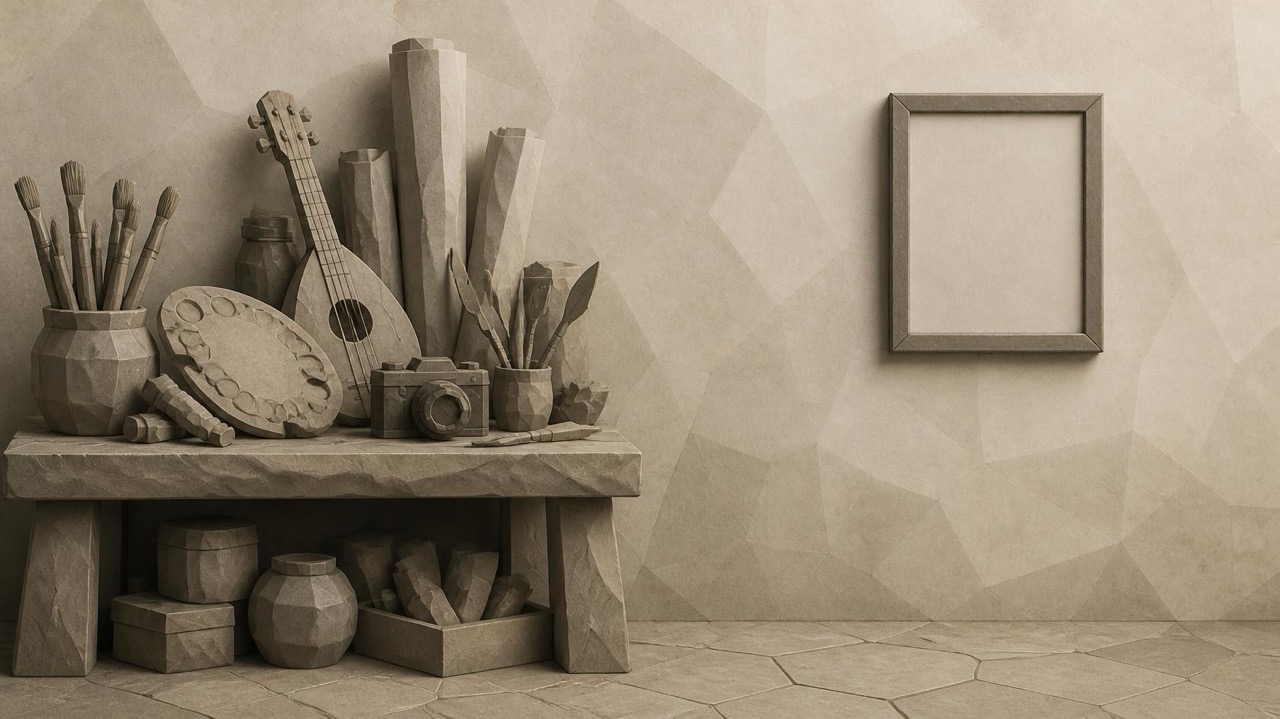
To this end, it adds to the existing eligible items: in-person and online courses on cultural subjects, musical instruments, sheet music, cameras, software specifically oriented towards creation, and artistic materials. This year's call provides a maximum of 160 million euros.
Two options, one choice
When applying for the voucher, you must choose between two ways of spending it. The two options are mutually exclusive and the choice cannot be changed once the application has been submitted, so it is worth deciding beforehand.
Option 1: split across three allowances.
- Up to 200 euros for live arts and audiovisuals, cultural heritage, in-person courses, instruments, sheet music, cameras, creative software, and artistic materials.
- Up to 100 euros for physical cultural products, such as books, magazines, video games, records, CDs, DVDs, or Blu-rays.
- Up to 100 euros for digital or online consumption, including online courses.
Option 2: everything in a single category.
The full 400 euros may be allocated to in-person or online cultural courses and workshops, musical instruments, creative media, and artistic materials.
The second option makes sense for anyone who already knows what they want to learn or which instrument they need: a printmaking course or a guitar can cost more than 200 euros. The first lets you spread the spending across concerts, books, platforms and creative tools. If a product costs more than the voucher covers or more than the applicable limit, the difference can be paid by another method accepted by the participating entity.
How to apply and how to spend
- Applications must be submitted via the official Youth Culture Voucher platform by 23:59, Spanish mainland time, on 31 October 2026.
- The grant is awarded only once, is individual, personal, and non-transferable, and is paid via a virtual prepaid card. Exceptionally, a physical card may be issued when the beneficiary does not possess a compatible mobile device.
- Expenditure must be made within a maximum period of one year from the date of the grant resolution. Once this period has elapsed, the unused balance is deactivated.
- It may only be spent at establishments, venues, academies, and platforms affiliated with the programme, which are listed on the map of entities on the official website.
- Purchases of physical products must be collected in person, with the exception of subscriptions to newspapers or magazines.
Figures from previous editions
In 2023, 323,700 young people received the voucher, 62% of the target population. They spent an average of €270.50 of the €400 available. 51.7% of expenditure was allocated to live arts, cultural heritage, and audiovisual arts; 27.1% to physical products; and 21.2% to digital consumption.
The 2024 preliminary data, still provisional, shows a similar distribution: 334,434 beneficiaries, 63.7% of the target population, with an average expenditure of €264.30. Digital consumption rose to 25.1%, physical products accounted for 24.9%, and live arts, heritage, and audiovisuals concentrated 50%.
In 2023, nearly four out of every ten young people in the target population did not become beneficiaries, and those who did left, on average, nearly a third of the amount unspent. The data does not allow the former result to be attributed solely to young people who did not submit an application: it may also include incomplete, withdrawn, or denied applications.
Official statistics count beneficiaries, participating entities and spending. I have not found a public evaluation that measures whether the voucher creates lasting cultural habits, even though that is one of its stated objectives. The new option for learning and creating is, in that sense, a reasonable bet: an instrument or a course can leave behind a practice that continues after the card has run out.
If you teach classes or workshops, this also affects you
The expansion opens an income stream for artists who teach. Cultural courses and workshops, whether in-person or online, can be paid for using the voucher if the provider is affiliated with the programme. The regulation allows for the affiliation of both legal entities and individuals who professionally and regularly engage in the sale or provision of the admitted cultural products, services, and activities.
The procedure is explained step by step in how to join the Youth Culture Voucher scheme if you teach courses or workshops.
The exclusion of works of art
The new regulation pays for the brushes, the canvas, the camera, the creative software and the course to learn how to use them. But Article 8.3 keeps an express exclusion: craft products and "works of visual and graphic art" are not eligible. The preamble states that these activities are promoted through other government instruments and measures.
This exclusion merits review. A young person may spend up to 200 euros on a concert ticket or artistic material, but not on an etching by an emerging artist or a small work purchased directly or in a gallery. For those who make a living from the visual arts, the voucher fuels demand for the means required to produce, while leaving out demand for the finished work.
Inclusion could be limited by verifiable conditions:
- Original work by living artists.
- A maximum price per piece, to prevent the voucher from becoming a means of purchasing high-priced works.
- Sale through galleries, artists, or fairs affiliated with the programme.
- Invoice and basic identification of the work.
This would extend the voucher to the sector currently excluded and introduce many young people to a practice that is barely part of their cultural education: purchasing art. It would also place in their hands a work that does not expire when the annual aid period concludes.
The voucher already pays for the brushes. It still has to pay for the painting.
About the open conversation
This text separates official data from my own position. If you work in galleries, cultural policy, or with young audiences and wish to discuss this interpretation, this notebook remains open: write to me.
Sources
Royal Decree 401/2026, of 20 May, laying down the rules governing the Youth Culture Voucher.
Extract of the call for the 2026 Youth Culture Voucher, published on 22 June 2026.
Ministry of Culture, 2023 Youth Culture Voucher statistics.
Ministry of Culture, 2024 preliminary results.
Ministry of Culture, results of the Youth Culture Voucher statistical analysis.