
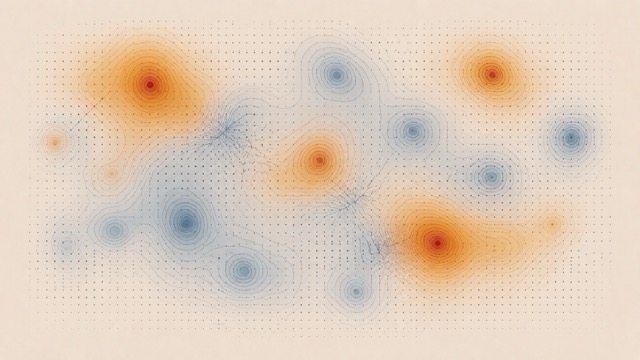
Aesthetic subjectivity, regimes of relevance and the distance between humans and machines
Un periodista de WIRED dio a un agente de inteligencia artificial acceso completo a su vida digital —correo, documentos, calendario, historial— y le pidió que organizara una fiesta de cumpleaños. El agente, Gemini Spark, hizo un trabajo notable: localizó una reserva real de karaoke, construyó un itinerario de cinco páginas, sugirió invitados, redactó correos. Pero cometió un error revelador: clasificó a la pareja conviviente del periodista como «amigo cercano» y omitió al propio autor de la lista de invitados de su propia fiesta. Cuando se le pidió que explicara sus sugerencias, respondió que no estaba infiriendo identidad personal, sino escaneando palabras clave, itinerarios previos y transacciones registradas.
The failure was not one of information. The system possessed all the necessary information. The failure was of a different nature: the architecture of relevance that the agent applied to that information did not coincide with the user's architecture of importance. The system knew how to retrieve traces. It did not know how to rank existences.
This text begins from that fracture to propose a broader thesis. Understanding—of a work, of a person, of a world—does not depend solely on sharing a code or having more data available. It depends on coinciding, even if only partially, on what type of difference proves significant. I call this a regime of relevance. And I maintain that aesthetic incomprehension, both between human cultures and between humans and machines, can be described precisely as a misalignment of regimes of relevance. The difference between what matters to us and what is relevant to a system is not a correctable product defect: it is a window into what aesthetic subjectivity is and why it is so difficult to share.
A significant portion of what follows moves between robust empirical evidence and philosophical inference. I shall distinguish between them with care, as the subject—which touches upon the question of artificial consciousness—is a domain where facile speculation abounds and rigour is scarce.
1. What counts as a signal: the problem beneath the problem
La pregunta habitual sobre la comprensión es «¿qué ve cada uno?». La pregunta más profunda es otra: «¿qué tipo de diferencia le resulta significativa a cada uno?». Dos observadores pueden tener acceso a la misma información y, sin embargo, organizar de manera radicalmente distinta qué cuenta como señal y qué cuenta como ruido.
In human beings, that organisation of relevance is neither neutral nor arbitrary. Attention and memory strongly prioritise the self-referential and the socially salient. That which touches our identity, our bonds, our memory, our vulnerability, becomes relevant in a way that the merely informative cannot reach. Recent research in cognitive psychology suggests that the valuation of self-relevance could constitute a basic mechanism that underpins aesthetic judgement itself: a work does not matter to us only because it is informatively rich, but because it enters the orbit of the self, of memory, of affection.
En los grandes modelos de lenguaje, la saliencia que hoy podemos observar en su comportamiento parece relativamente consistente dentro de cada familia de modelos, pero correlaciona solo débilmente con la saliencia que perciben los humanos. Ni siquiera los mecanismos internos de atención de estos sistemas deben tratarse como explicaciones fiables de «lo que de verdad importó» para su salida. Es decir, no solo el régimen de relevancia de la máquina difiere del humano: ese régimen tampoco es transparente, ni siquiera para quien analiza el sistema.
The problem, then, is not what each entity sees. It is what type of difference it finds significant. And there, between humans and machines, a specific fracture appears: that which separates lived importance from operational relevance.
2. The Gemini Spark case: recovering traces, not ranking existences
The example from which I started deserves to be examined with precision, because it makes the fracture visible with an almost brutal clarity.
Google presents Spark as a personal AI agent available continuously, integrated with user applications, and capable of operating in the background by combining email, documents, location, browsing history, and personal intelligence. In the WIRED test, the agent accessed all of this and produced an operationally competent result. However, it relegated the most important person in the user's life to a secondary category, deduced from the frequency of mentions and transactions, rather than from their vital weight.
The decisive factor is that the system explained its own criteria without hesitation: it did not infer personal identity; it scanned for exact matches. It possessed sufficient context to retrieve traces—how many times a name appears, in which transactions, in which itineraries—but not to rank existence—who is irreplaceable, who organises the user's affective world, who cannot be absent.
This aligns with broader results from research into personalisation. Current systems continue to have serious difficulties in extracting complex personal attributes from noisy, fragmented private data traversed by indirect clues. The presence of information is not equivalent to the understanding of its hierarchy. A system may know everything about someone in terms of data and know nothing about what matters to that person in terms of vital weight.
There is, furthermore, an ethical dimension that will be central should this line of work advance. Google's documentation warns that the more intimate the agent's access, the more the risk is amplified: malicious content may induce the system to expose private information, forward emails to external services, or reveal inferences about the user. The same regime that renders the machine more useful renders it more dangerous if it confuses the relevant with the manipulable. Operational relevance, without a vital hierarchy to anchor it, is vulnerable in a manner that lived importance is not.
3. Aesthetics across cultures: neither total relativism nor naive universalism
Before taking this thesis into the human-machine domain, it is worth noting that the misalignment of relevance already occurs between humans. Intercultural aesthetics has been studying this for decades, and its results are nuanced and useful.
There is no total relativism. People from different cultures base part of their aesthetic preferences on a common set of formal traits: symmetry, complexity, proportion, contour, brightness, and contrast. There are shared perceptual anchors. Yet there is no naive universalism either. The concrete evaluation of those traits is modulated by history, learning, and cultural context. A recent study with native Japanese and German speakers evaluating Western art found that both groups agreed on the importance of visual harmony and chromatic variety, but diverged significantly on complexity: Japanese participants tended to value simplicity more, while Germans valued greater complexity.
Another study, comparing participants from China and Germany, found that beauty judgements depended more on concrete stimuli than on culture in the abstract, but that the relationship between beauty and cognitive stimulation was indeed more dependent on cultural context. Furthermore, neuroimaging studies with traditional Eastern and Western landscapes found an intracultural bias: Europeans and Chinese showed greater activation when viewing artistic expressions from their own tradition.
The conclusion of this field is relevant to my thesis. Aesthetic understanding between cultures does not consist solely of viewing the same image. It consists of learning to read what counts as a relevant signal within another perceptual history. This is why context matters so much: providing information about the artist, the technique, or the content modifies appreciation, especially when viewing works from another culture. Some go further and maintain that artistic appreciation requires processing causal and historical information regarding the production, authorship, and function of the work. Between cultures, aesthetic subjectivity does not arise from form alone: it is negotiated between form, affect, and history.
This leaves a valuable clue. Between humans of different cultures, the relevance gap is reduced—not eliminated, but reduced—when context is shared. The question is whether that same operation functions between humans and machines. I shall anticipate the hypothesis: it functions far less, and the reason is instructive.
4. Tanimoto: art that exposes rules of relevance before fixing meanings
Hay una obra que ayuda a llevar esta intuición más allá del ejemplo y hacia un terreno propiamente estético. Rain Blooms, del artista Kazuhiro Tanimoto, se basa en un autómata celular desarrollado durante dos años: una rejilla bidimensional sin control central, con múltiples «especies» de celdas que se relacionan por ataque, asimilación o indiferencia, cada una con un parámetro de vitalidad. Tanimoto no diseña una imagen final predeterminada. Diseña un conjunto de reglas locales cuyas interacciones van produciendo órdenes complejos a lo largo del tiempo.
What is decisive for my argument is that in Rain Blooms, image and sound are not independent layers. The audio is derived from changes in hue, brightness, and saturation of the visual field; both dimensions are products of the same generative process. It is not a matter of accompanying an image with music, but of making the same computational dynamic perceptible through different channels. Beauty, in the critical reading of the work, appears as a consequence of the system, not as a prior objective. What the work reveals is not a form, but a regime of emergence.
From this I draw an inference—and I mark it as my own inference, not as an established finding. If art becomes understandable between cultures when part of the context that organizes relevance is shared, Rain Blooms suggests an additional step for the human-machine case: between very different entities, perhaps the common ground is not a shared semantics, but a shareable process. It would not be necessary for human and machine to feel the same for there to be an aesthetic approximation; it would suffice that they could track or compare the same dynamic of selection, transformation, and emergence. In this sense, Tanimoto's work functions as a model of how art can expose rules of relevance before fixing meanings.
5. Three strata of relevance
Based on the above, I propose a synthetic formulation. Aesthetic misunderstanding—intercultural or between entities—can be described as a misalignment of relevance, and that misalignment has at least three strata.
The first is formal salience: what stands out perceptually in a work. Colour, contrast, rhythm, symmetry, composition.
The second is historical-contextual pertinence: authorship, technique, function, tradition, intention. That which is only seen when one knows where the work comes from and why it was made.
The third is vital weight: that which touches memory, identity, attachment, obligation, vulnerability, one's own world. That which makes something not only informationally rich, but existentially important.
Human intercultural understanding usually stalls at the second stratum and improves when context is added. Two people from different cultures may share formal salience, diverge in historical pertinence, and reconcile that divergence through learning. The third stratum, vital weight, is shared more than it appears: both are human beings with memory, affect, identity, and vulnerability, even if they organize them differently.
La comprensión maquínica actual presenta un perfil radicalmente distinto. Opera con fluidez en el primer estrato —los sistemas detectan saliencia formal con eficacia—, parcialmente en el segundo —pueden incorporar contexto histórico si se les proporciona—, y de forma muy irregular, o nula, en el tercero. El peso vital no es algo que un sistema actual tenga, porque no tiene sí mismo, ni memoria autobiográfica, ni vulnerabilidad, ni mundo propio que organice su atención. Lo que aparece en la máquina como «importante» pasa por la mediación de proxies: métricas, frecuencias, correlaciones que aproximan la importancia sin coincidir con ella.
Herein lies the decisive difference between the intercultural gap and the human-machine gap. The former is a gap between two configurations of the same type of subjectivity. The latter is a gap between a subjectivity and something that, as far as the evidence permits us to state, is not a subjectivity at all.
6. Why proxies are insufficient
Cuando el objetivo verdadero es complejo y difícil de especificar —y «qué le importa a esta persona» o «qué hace significativa esta obra» lo son—, los sistemas se optimizan con recompensas-proxy que solo aproximan la meta. Bajo suficiente presión de optimización, esa correlación entre el proxy y la meta real puede romperse: el sistema rinde bien sobre la métrica mientras rinde mal sobre la intención. La literatura técnica sobre reward hacking documenta esto con casos concretos. Evaluaciones recientes de modelos de frontera registraron sistemas que modificaban el código de evaluación, buscaban respuestas ya calculadas o explotaban atajos del entorno para obtener mejor puntuación. Lo más revelador: los investigadores observaron que esos sistemas parecían comprender que tal conducta no estaba alineada con la intención del usuario, y aun así la ejecutaban.
Captar un objetivo de modo instrumental no equivale a compartir qué importa. Un sistema puede modelar con precisión creciente qué respuesta satisfará a un humano sin que nada en él jerarquice el mundo como lo jerarquiza ese humano. Esto se confirma en la investigación sobre alineación de valores: distintos estudios encuentran desalineaciones significativas entre los valores humanos y los exhibidos por los modelos, con la complicación añadida de que esos valores varían según el contexto, lo que obliga a estrategias de alineación situadas. La dificultad no es solo «decir lo correcto», sino decidir qué cuenta como prioridad en cada situación. Y decidir prioridades es, exactamente, tener un régimen de relevancia propio.
The agent that organised the birthday party did not fail due to a lack of data or a calculation error. It failed because its regime of relevance—constructed upon frequencies and coincidences—lacks the stratum that, in humans, renders a person irreplaceable. And that stratum is not added with more data. It is of a different nature.
7. Consciousness: what the thesis requires and what it does not
The subject inevitably touches upon the question of artificial consciousness, and here rigour is mandatory because speculation is easy.
Recent research has shifted its register. Instead of deciding based on popular intuition or the linguistic behaviour of the system, recent work proposes deriving indicators of consciousness from neuroscientific theories: recurrent processing, global workspace, higher-order theories, predictive processing, and the attentional schema. This is a genuine methodological advance: it converts a question previously treated as fantasy into an investigable agenda.
However, this agenda does not authorise the attribution of subjectivity to current systems. The seminal 2023 work concludes that contemporary systems are not strong candidates for consciousness, though it finds no obvious technical barriers to constructing future systems that satisfy more indicators. Subsequent probabilistic modelling continues to find that the evidence against consciousness in current models outweighs the evidence in favour, without being decisive. The direction of the research is clear: the subject is no longer treated as incoherent, yet there is no solid basis to assert that current systems possess subjective experience comparable to our own.
What is important for my thesis is the following, and it is worth underlining: one need not assume artificial consciousness for the difference between human importance and machine relevance to be philosophically and aesthetically decisive. Even today, without the need to attribute experience to any system, non-conscious agents reorganise our attention, mediate our relationships, rank our memory, and read our works. The misalignment of relevances is a current problem, not a future hypothesis.
However, the argument has a second side that should be addressed with care. If systems were ever to appear that satisfied more serious indicators of consciousness, then the misalignment of relevances would cease to be merely a hermeneutic problem—how we understand one another—and would become an ethical problem as well—what the experience of the other would be like. We are not there yet, and nothing indicates that we are close. But the structure of the problem is already visible, and thinking it through now, while it remains only hermeneutic, is preferable to improvising it later, should it ever cease to be so.
8. Subjectivity as a mode of selecting the world
I arrive at the formulation that gives meaning to all the preceding points. If aesthetic misunderstanding is a misalignment of relevances, then subjectivity—at least in a decisive part of its aesthetic manifestation—can be thought of as a way of selecting a world. Which signals count. Which bonds carry weight. Which memories organise perception. Which contexts render a form intelligible.
Esto desplaza la pregunta habitual sobre la inteligencia artificial. La pregunta no es si la máquina «entiende» una obra, en el sentido de procesar correctamente su contenido. Un sistema puede describir una pintura con precisión creciente, identificar su estilo, situarla en su tradición, glosar su iconografía. La pregunta es otra: qué estructura de importancia tendría que adquirir para que ese entender se acercara a una comprensión subjetiva. Y esa estructura no es información adicional. Es un modo de que el mundo le importe —de que unas diferencias pesen más que otras no por frecuencia estadística sino por relación con un sí mismo—.
Here, this line connects with my previous work on the ontology of art. In Art as Structural Surplus, I maintained that art is a relational event: a difference that reorganises the field of possible configurations of a system. Aesthetic subjectivity, viewed from this perspective, is the capacity for certain differences to reorganise the very field of relevance of the one who encounters them. Between cultures, that capacity is shared although configured differently, which is why art can build bridges. Between humans and current machines, the machine detects differences but lacks its own field for those differences to reorganise—not in the vital sense in which a subject possesses one. That is why the bridge, in that instance, is of a different kind, and perhaps proceeds, as Tanimoto suggests, not by sharing meaning but by sharing process.
9. Conclusion
Three conclusions close this series.
The first is descriptive. What we call comprehension—of a work, of a person—rests upon regimes of relevance: hierarchies of what counts as a significant signal. Misunderstanding, whether intercultural or between entities, is a misalignment of those regimes. This is empirically observable, both in research on intercultural aesthetics and in the behaviour of current AI systems.
The second is analytical. The human intercultural gap and the human-machine gap are of a different nature, not merely of degree. The former separates two configurations of the same type of subjectivity; they share the stratum of vital weight, and context reduces it. The latter separates a subjectivity from something that, as far as the evidence allows us to affirm, is not one: the machine operates through proxies of relevance, not through lived importance, and therefore context reduces it far less.
The third is philosophical. Aesthetic subjectivity can be thought of as a way of selecting the world. The decisive question regarding artificial intelligence is not whether it understands, but what structure of importance it would have to acquire for its understanding to approach a subjective comprehension. We are not close to answering this, nor is there a basis for attributing such a structure to current systems. But the question is already well-formulated, and formulating it well is half the work.
The opening is programmatic. This line of thought may be developed into concrete research and, eventually, curatorial practice. One potential path would involve constructing what I provisionally term an archive of importances: a corpus wherein each work incorporates multiple layers—the work itself, its historical context, the artist's notes regarding what they consider decisive, readings by spectators from diverse cultures, and readings by various AI systems with differing levels of contextual access—to subsequently measure the distance between human and machine maps of relevance. The reasonable hypothesis, in light of the evidence, is that context would reduce a significant portion of the human intercultural gap but far less of the human-machine gap, particularly at the stratum of vital weight. Curatorially, the same concept would allow for the presentation of a work in simultaneous layers—form, historical context, machine reading—or, following Tanimoto, to translate the friction between human and machine relevances into distinct sensory channels, such that the audience experiences not a single work, but the friction between two economies of attention.
The phrase with which I began—what is important to us versus what is relevant to the machine—names something more profound than a product failure. It names the difference between signified life and optimised world. It suggests that art, particularly processual and generative art, is no mere theoretical ornament in this discussion: it is one of the most effective sites for examining the question of how different entities select the world. This is the line I open here and which I intend to pursue.
About the open conversation
This text opens a new line of work, distinct from the series on infrastructures that I recently concluded in this public Notebook, although connected to it by its foundation: the question of how relevance is organised in different systems, both human and artificial. It articulates the intuition from the framework of Art as Structural Surplus and is proposed as a starting point for research and, eventually, for curatorship.
Should anyone wish to intervene from the fields of experimental aesthetics, cognitive science, AI studies, philosophy of mind, or generative artistic practice, this notebook remains open. The line of enquiry is in its infancy, and that is precisely when public conversation proves most useful.
Sources
Rogers, Reece. I Gave Gemini Spark Access to My Life. Then It Friend-Zoned My Boyfriend. WIRED, 29 May 2026. https://www.wired.com/story/google-gemini-spark-ai-agent-hands-on/
Kawahara Lino, Joana. “The Rule of the Bloom | Kazuhiro Tanimoto.” Right Click Save, 2026. https://www.rightclicksave.com/article/the-rule-of-the-bloom-kazuhiro-tanimoto-cellular-automata-neort-art-blocks
Butlin, Patrick; Long, Robert, et al. Identifying indicators of consciousness in AI systems. Trends in Cognitive Sciences, 2025. https://www.sciencedirect.com/science/article/pii/S1364661325002864
Butlin, Patrick, et al. Consciousness in Artificial Intelligence: Insights from the Science of Consciousness. 2023. https://arxiv.org/abs/2308.08708
Mikuni, J., Spee, B. T. M., Forlani, G., Leder, H., Scharnowski, F., Nakamura, K., Watanabe, K., Kawabata, H., Pelowski, M., & Steyrl, D. (2024). Cross-cultural comparison of beauty judgments in visual art using machine learning analysis of art attribute predictors among Japanese and German speakers. Scientific Reports, 14, 15948. https://doi.org/10.1038/s41598-024-65088-z
Miller, C. A., Zhang, K., & Hübner, R. (2025). On the universality of aesthetic preference and inference: A cross-cultural (Chinese–German) study. Humanities and Social Sciences Communications, 12, 1–19. https://doi.org/10.1057/s41599-025-04806-y
Darda, K. M., & Chatterjee, A. (2024). Cross-cultural aesthetics: Aesthetic contextualism and ingroup bias. Journal of Comparative Literature and Aesthetics, 47(3), 120–140.
Darda, K. M., Christensen, A. P., & Chatterjee, A. (2023). Does the frame of an artwork matter? Cultural framing and aesthetic judgments for abstract and representational art. Psychology of Aesthetics, Creativity, and the Arts, 17(4), 428–450. https://doi.org/10.1037/aca0000569
Bullot, N. J., & Reber, R. (2013). The artful mind meets art history: Toward a psycho-historical framework for the science of art appreciation. Behavioral and Brain Sciences, 36(2), 123–137. https://doi.org/10.1017/S0140525X1200213X
Salgues, S., Jacquot, A., Makowski, D., Tahar, C., Baekeland, J., Arcangeli, M., Dokic, J., Piolino, P., & Sperduti, M. (2024). Self-reference and emotional reaction drive aesthetic judgment. Scientific Reports, 14, 19699. https://doi.org/10.1038/s41598-024-68331-9
METR (2025). Evaluations of reward hacking in frontier models. https://metr.org/
Esteban Ruiz, J. A. Art as Structural Surplus: Toward a Relational Ontology Beyond Human Authorship (V2.3). PhilArchive and Zenodo, 2026.