
As a child, I aspired to be an astronomer, a pianist, a biologist, a meteorologist, and a journalist; I was fascinated by writing, music, planets and galaxies, technology, and daubing paint because drawing bored me; later, I became interested in biochemistry, geography, climatology, and advertising. However, of all mathematics, only integrals ever amused me. My preferences were so varied that I never had a clear idea of what I wanted to be when I grew up. So many, in fact, that I became almost nothing.
I always attributed the good fortune of having studied Fine Arts to my mother. One day, while I was in my first year of Philology, she noticed I was bored with that extended secondary education and asked if I wanted to study painting. I liked the idea, but it had never crossed my mind because I did not enjoy drawing; the one who drew well at home was my father, and I did not inherit his skill with a pencil. Even so, the challenge seemed so exciting that I accepted it without hesitation. The power of dopamine...
Many years earlier, my father, who was deaf-mute and also very restless, frequently asked me questions that were truly difficult for a child under ten years of age, such as what music is, or upon what basis we claim someone sings well or poorly, why it is possible that I might not like someone who I acknowledged sang well, or what it feels like to be motivated to dance. From a very early age, perhaps unintentionally, he made me acutely aware of the senses and what they signified in my life.
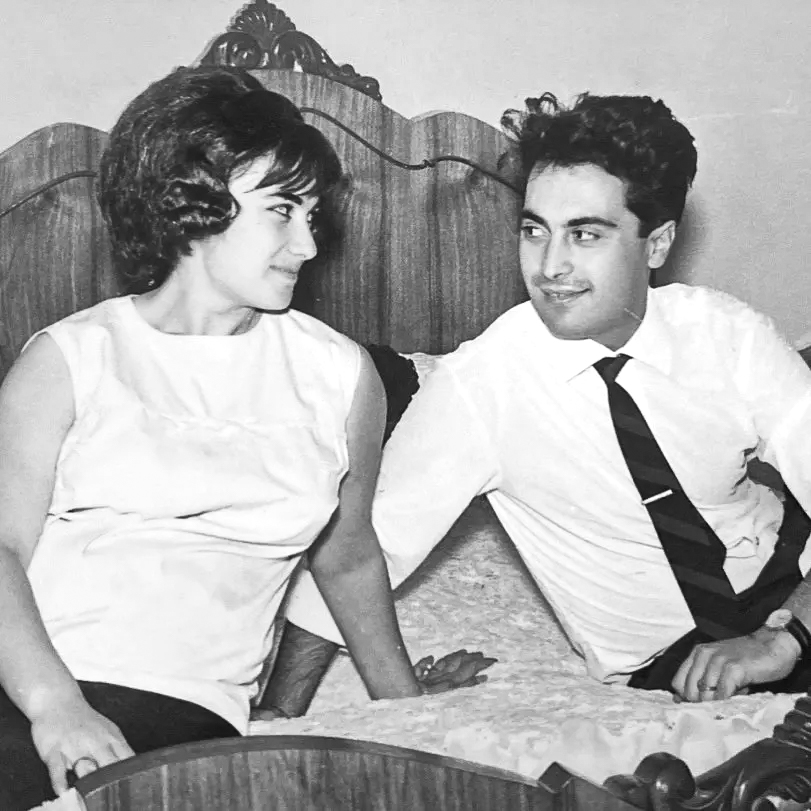
He loved to play chess and read, especially history books and newspapers, as he was very interested in current affairs. He also read the news daily on television with subtitles and via teletext. One day, I turned on the television and a film was playing; I only remember that it was in black and white. I automatically activated the subtitles and, to my surprise, he asked me to turn them off. My father was a sensitive person, and I remember him becoming moved, laughing, and crying at the cinema. I asked him how it was possible that he enjoyed it without subtitles, and he replied without the slightest hesitation: 'because I prefer to imagine'.
Now, with the passing of years, I know that I owe my way of understanding art to him more than to my studies and the faculty: an art that transcends the medium, the format, the technique, and even the artist and their intention.
For me, as my father showed me, art occurs when a person is moved. And this was my first great lesson.