
In 2021, sales of art-related NFTs on Ethereum, Flow and Ronin totalled 2.6 billion dollars, more than one hundred times the value of the previous year. 73% corresponded to resales. Between purchase and resale, an average of 33 days elapsed; the benchmark used by Art Basel and UBS for the traditional market placed the interval between 25 and 30 years.
Five years later, there is no public and homogeneous series that allows the decline to be summarised with a percentage. Another change can indeed be tracked: closed platforms, archives under restoration, museums that preserve tokenised works and owners who discover that the token does not always contain the work.
Closing the platform
Gemini announced on 23 January 2026 that Nifty Gateway would close on 23 February and activated a dedicated withdrawal mode. MakersPlace had already bid farewell after operating since 2018; it maintains that NFTs minted via its contracts remain on the chain. Async Art closed in 2023. Digital Rescue Lab is reconstructing its archive and warns that it is still recovering assets, controls, and musical reproduction.
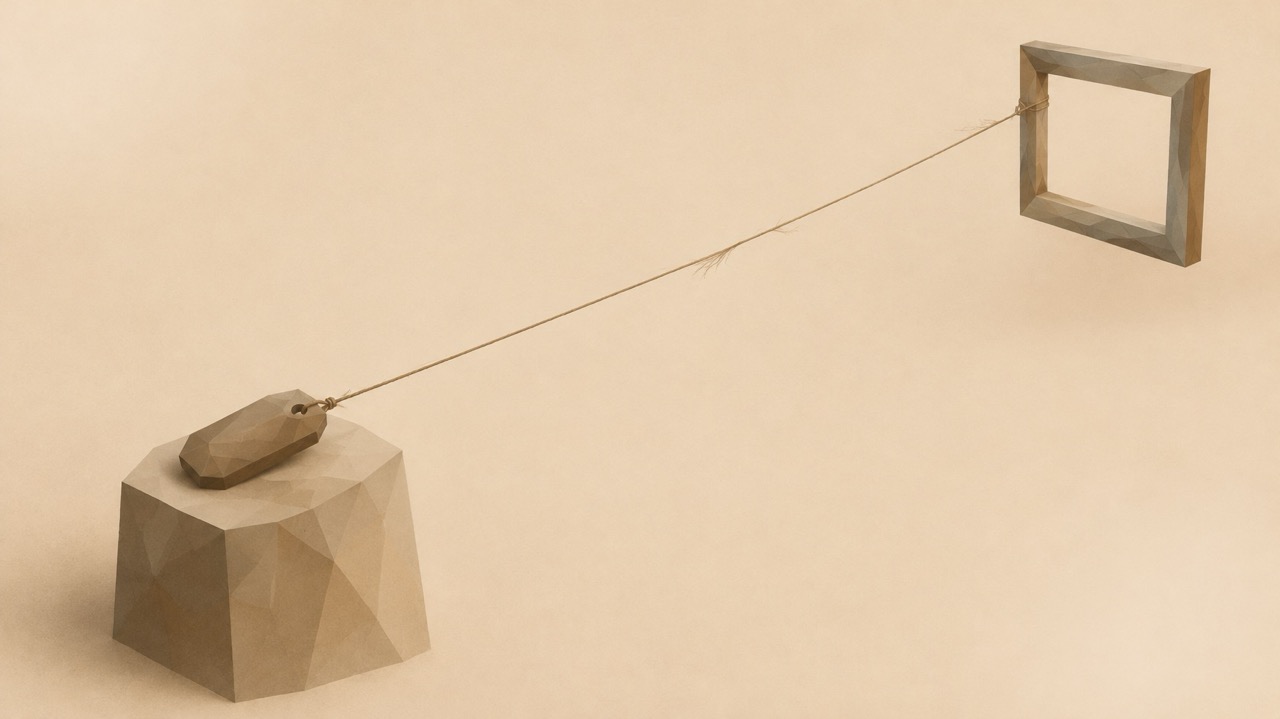
The persistence of the token does not guarantee that of the work. An NFT can register a contract address, identifier and relationship with a wallet. The image, video, code, interface or metadata may reside on a server, an artist's domain, IPFS without assured persistence or a gateway that disappears.
The chain may retain the record while the file or interactive experience is lost. "It is on the blockchain" describes a registration relationship, not a complete architecture of preservation.
Sixteen million cases
A study by The Web Conference 2026 gathered over sixteen million NFTs and analysed the location of their assets. It found a widespread dependency on fragile external storage and a "high-value asset trap": valuable pieces sustained by centralised infrastructure. It classified eight defects into three groups: access failures, potential for alteration, and falsification.
Decentralisation admits degrees. The contract may be on Ethereum and the file on a standard server. IPFS distributes content-based addressing, but someone must pin and serve the file. A work may depend on a JavaScript library, an API, fonts, browser, weather service or compatible wallet.
For a collection, the useful question is not whether the piece "is an NFT". One must inventory:
- Contract, network and token.
- Master and derivative files.
- Source code and executables.
- Hashes of each file.
- Libraries, typefaces, APIs and versions.
- Contract and platform metadata.
- Installation documentation.
- Exhibition, migration and emulation rights.
- Keys and credentials without dependence on a single person.
Museums after the bubble
The Centre Pompidou incorporated eighteen projects by thirteen artists related to blockchain in 2023, including its first NFTs. The acquisition included cryptoart, fine arts, net art, and generative art. The museum placed it within its new media collection and declared that it did not seek to focus on the collectibles phenomenon.
The Buffalo AKG acquired tokenised editions of the sixteen Peer to Peer works in December 2022. The institution presents it as the first major NFT collection of a US museum. Its records describe applications, GLTF models, video files, WAV, PNG, and PSD, HTML environments, PDF, and smart contracts. That enumeration presents the object better than the word NFT.
MoMA announced the acquisitions of Unsupervised – Machine Hallucinations – MoMA, by Refik Anadol, and 3FACE, by Ian Cheng, in October 2023. The former generates forms via a system trained on museum data and responds to the environment; the latter analyses data from its owner's wallet. Conserving them implies models, data, software, behaviour, hardware, and exhibition conditions.
I have not located an equivalent acquisition published by a Spanish public museum. This result describes the institutional sources reviewed; it does not demonstrate that any Spanish collection possesses tokenised work.
MiCA does not regulate all NFTs
Regulation (EU) 2023/1114, MiCA, has been fully applicable since 30 December 2024. Its Article 2.3 excludes unique and non-fungible crypto-assets. The recitals warn that a broad series or collection may be an indication of fungibility and that fractions of an NFT are not considered unique in themselves.
The commercial designation does not determine the regime. A token presented as an NFT may fall under MiCA due to its structure, standardisation or economic function. Furthermore, remaining outside MiCA does not mean remaining outside the law: consumer, intellectual property, tax, anti-money laundering, financial markets or data protection regulations may apply.
The General Directorate of Taxes has resolved queries regarding sales of tokenised digital illustrations. A query binds the Administration with respect to the person who formulated it and the facts described. It does not constitute a universal tax regime. The condition of the seller, the rights transferred, the location, the currency and the consideration are what matter.
Brand, file and token
In Hermès International v. Rothschild, a federal jury concluded in February 2023 that the MetaBirkins infringed Hermès' rights and awarded 133,000 dollars. The order of 23 June imposed a permanent injunction and measures regarding assets, contracts and domains. The existence of the tokens did not neutralise the trademark action.
Neither does the token resolve authorship, copyright, or publicity. It may attest that a wallet executed a transaction. It does not, in itself, demonstrate who created the work, what rights the purchaser acquired, or whether the linked file was lawful.
In The Nameless Buyer, I analysed how registered ownership may coexist with disputed provenance. Infrastructure changes; the necessity to document title, powers, and the chain of transmission remains.
A conservation dossier
Before purchasing tokenised digital art, I would request:
- A preservation file, not merely a viewing link.
- A hash and a verifiable relationship between the file and the token.
- A contract or certificate describing rights and obligations.
- Source code and dependencies, should the work require them.
- Installation and execution instructions.
- Permission to migrate or emulate for conservation purposes.
- A plan for domains and external services.
- A copy of the relevant metadata.
- An update method, should the artist continue the work.
- Studio contact details and an alternative custodian.
The guide on platform closure develops the rescue process. The guide on purchasing digital art organises the preliminary dossier.
The 2021 market sold scarcity, access, and the expectation of resale. Museums and archives have inherited a less visible task: maintaining the part of the work that does not live in the token.
The token may survive alone.
On the open conversation
This text continues the Post-NFT Digital Art series. If you hold works from a closed platform or work in preservation, you may write to me.
The author’s relationship to the case
I collect digital art within the Esteban-Ruiz Collection, including works minted as NFTs. I maintain no economic relationship with the platforms, museums, or companies cited.
Sources
- UBS, "All about NFTs".
- Gemini, Nifty Gateway closure.
- MakersPlace, history and farewell.
- Async Art Archive.
- Wu et al., study on NFT storage.
- Centre Pompidou, 2023 acquisitions.
- Buffalo AKG, digital acquisition.
- MoMA, digital art acquisitions.
- Regulation (EU) 2023/1114.
- CNMV, obligations under MiCA.
- Hermès International v. Rothschild, appeal file.