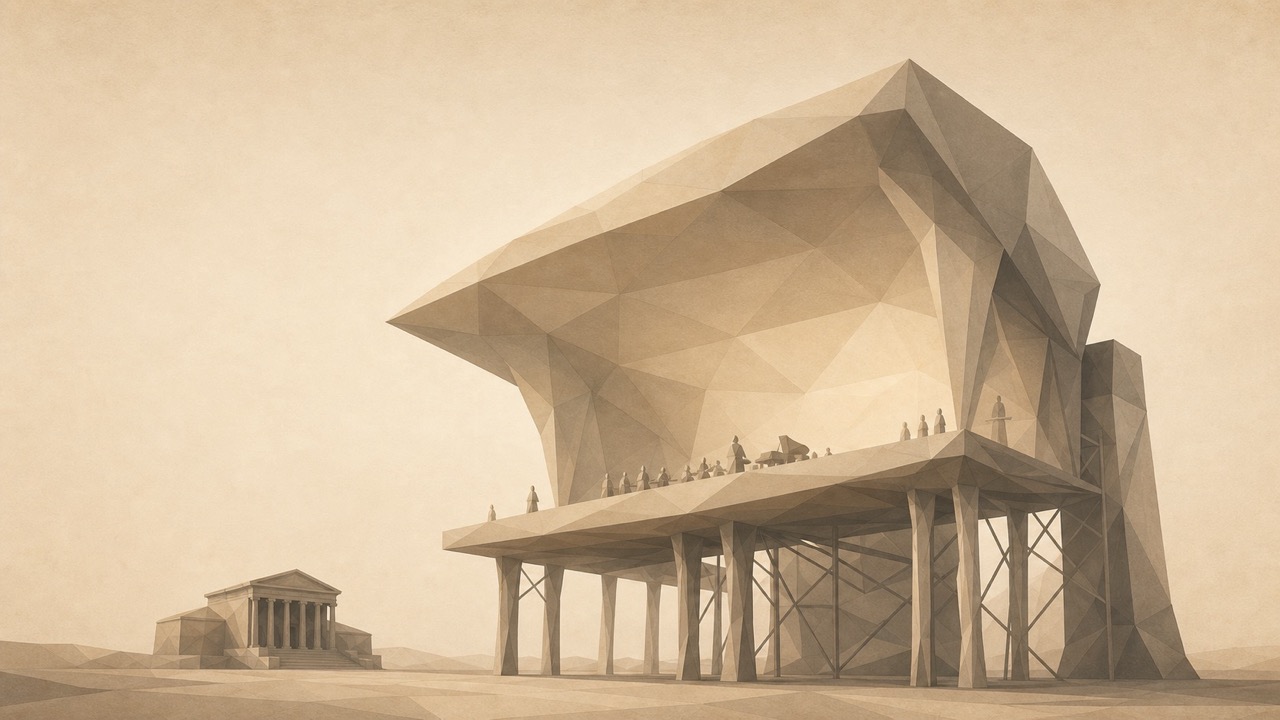
Five and a half kilometres from the centre of Toledo, on an estate known as Zurraquín, lies a five-hectare stage where fifteen hundred years of Spanish history are performed each evening. The production is entitled El Sueño de Toledo and serves as the centrepiece of Puy du Fou España, the first full-scale establishment outside France of the French historical theme park. The company states that it received 1,720,000 visitors in 2025. This figure originates from the company itself, via a press release presented at FITUR: almost all statistics concerning this park are produced by the park itself.
Let us compare this figure with those that are publicly verified. The Ministry of Culture publishes annual attendance figures for state museums. In 2025, the El Greco Museum in Toledo received 149,432 visitors, while the Sephardic Museum received 256,468. If the figure declared by the park is accepted, Puy du Fou attracts approximately eleven times more people than the El Greco Museum and nearly seven times more than the Sephardic Museum. This comparison is not straightforward, and it must be noted that one figure is self-reported by a private company, whereas the others are official statistics. However, even accounting for potential commercial optimism in the former, the order of magnitude is indisputable. The historical experience most consumed in Toledo is not located within any of its museums.
El País initiated a pertinent debate this August by questioning how the city intends to narrate its past when the most visited account is produced on a private stage on the outskirts. Yet there is an underlying layer that demands greater scrutiny, which concerns structure rather than aesthetics.
This private narrative is not self-financed. When the Regional Government of Castilla-La Mancha approved the park as a Project of Singular Interest in 2018, and subsequently when support was formalised, public funds entered the equation: a grant exceeding 17.8 million euros in Regional Incentives, sourced from European ERDF funds, against a declared investment of over ninety million. Furthermore, there are significant agreements in place: one regarding vocational training, through which public students complete their training at the park; another for tourism promotion signed by the Toledo City Council; and a third providing reduced rates for city residents. While the management is private, as stated in the official documentation, the framework supporting it is largely public.
Tenemos, entonces, un relato histórico de mil quinientos años, montado por una empresa, que ninguna institución pública valida, revisa ni corrige, y que sin embargo se levanta en parte sobre dinero público y promoción institucional. El parque se describe a sí mismo como una combinación de «rigor histórico, innovación tecnológica y narrativa». Pero quien certifica ese rigor no es una universidad ni un museo ni un archivo: es el propio guion. En un museo estatal, el relato lo firman conservadores e investigadores, responde a criterios profesionales y se le puede pedir cuentas. En el espectáculo, el relato responde a lo que emociona y llena butacas, que es una vara legítima para un espectáculo y muy distinta de la que rige una institución patrimonial.
No sostengo que el parque mienta, porque eso exigiría un análisis caso por caso que no he hecho y que no me corresponde. Sí registro que hay historiadores y críticos que han puesto reparos serios y con firma. Un análisis en El Salto habla de «una versión espectacularizada del pasado nacional» y va más lejos en su calificación política; un texto del Archivo de la Frontera distingue entre ficción basada en la historia y divulgación histórica, y advierte de tergiversaciones y usos interesados. No hago míos esos juicios ni necesito hacerlos para lo que quiero decir. Me basta con constatar que el relato es discutido por quienes saben de historia, y que esa discusión ocurre completamente fuera del aparato, sin ninguna vía para entrar en él, porque el aparato no rinde cuentas a nadie más que a su taquilla.
This connects to a subject I have been exploring for some time: that cultural institutions do not merely display works or narratives, but produce recognition, rendering something worthy of being seen and believed. A museum produces such recognition according to specific rules: provenance, conservation, research, and public accountability. The spectacle produces the same effect of recognition—this is our history, this is worth seeing—but without those rules, relying instead on those of emotion and footfall. The unsettling aspect is not that the spectacle exists. It is that it produces historical recognition on a scale that no institution in the city achieves, and that it does so with public support and without public oversight.
Does Puy du Fou trivialise history? That is the perennial objection, to which the park responds by pointing to its box office figures. What is truly at stake is something else: whether it is sound for the narrative of the past that most citizens in a city like Toledo receive to be produced in a private venue, supported in part by public funds, and without any public authority having a say in what is recounted there. We finance the stage. We hold no key to the script.
About the open conversation
This text does not judge the historical rigour of the park, which would require an analysis that is not my remit, nor does it debate whether the spectacle is enjoyable. It concerns a structure: a private historical narrative, supported in part by public money and institutional promotion, which produces recognition on a scale that the city’s public museums do not reach, and over whose content no public authority has jurisdiction. It is a question that has interested me since the enquiry into how institutions produce recognition and who controls that power. If anyone wishes to intervene from the fields of history, heritage management, museology, or cultural policy, this notebook remains open.
Sources
Puy du Fou España, press releases (FITUR, 26 January 2026) and official website: visitor figures, turnover and impact, self-reported; opening dates and description of the model.
Santacana López, Pablo. El Salto, 18 May 2025. Testa, Pablo M., Archivo de la Frontera, 3 June 2025.
Ministry of Culture, statistics on visitors to state museums, 2 January 2026 (Museo del Greco: 149,432; Museo Sefardí: 256,468, in 2025).
Junta de Castilla-La Mancha: Governing Council Agreement of 13 November 2018 (approval of the Project of Singular Interest); announcement of Regional Incentive aid of over 17.8 million with ERDF funds (25 February 2021); vocational training agreement (6 October 2022).
Toledo City Council: tourism promotion agreement with Puy du Fou España and CEFAPIT (23 February 2022); agreement for reduced rates for registered residents (July 2021).
El País, “Toledo and Puy du Fou, when the spectacle puts heritage to the test”, 16 August 2026.
Reviewed on 27 September 2026: dates and references corrected.