
On 23 September 2026, the International Day of Sign Languages, Europe Beyond Access presented its strategy for Deaf artists, developed with Deaf artists and interpreters. It seeks to increase their participation and visibility within the programme and to strengthen the relationship with those who interpret sign languages. One of its actions is a glossary in International Sign containing the project's terms. The organisation clarifies that it does not intend to establish a correct or universal sign, but merely to facilitate work between different countries and languages.
Europe Beyond Access is a consortium of ten European performing arts organisations, including the Mercat de les Flors in Barcelona. According to the organisation, its 2024-2027 programme receives two million euros from Creative Europe, matched with its own funds, to commission and present dance and theatre works by artists with disabilities, facilitate their international circulation and reduce the barriers they encounter in the European market.
A call with a deadline
Perform Europe's third call for performing arts tours across the 41 countries taking part in Creative Europe is open until 22 October 2026, 23:59 CEST. It distributes 1.4 million euros. Each partnership may request 15,000, 25,000 or 55,000 euros, plus a supplement of up to 5,000 euros for accessibility and sustainability measures. Applicants need at least three partners from three countries, a completed work and a tour of at least three countries between 1 March 2027 and 31 January 2028.
Each application must choose a primary priority: inclusion and diversity or the fight against climate change, and must also address the other. If you intend to apply, separate the mandatory requirements from the evaluation criteria: I explain this in how to prepare an application for a public cultural grant.
Two statistics that do not intersect
Both programmes start from the same diagnosis: artists with disabilities encounter barriers to creating, touring, accessing opportunities, and leading. Public statistics do not allow for the measurement of the scale of this problem.
The Ministry of Culture's cultural employment statistics are a tabulation of the Labour Force Survey. They publish results by sex, age, education, employment status and working hours, but the public tables do not include disability. Eurostat's cultural employment series analyses the same variables and does not cross them with disability either.
The National Statistics Institute does measure the employment of people with disabilities. Its statistic combines the Labour Force Survey with records of recognised disability and is limited to people aged 16 to 64 with a degree of 33% or higher, as well as certain equivalent pensioners. In 2024, the activity rate for this group was 35.4%, the employment rate was 28.9%, and the unemployment rate was 18.5%. However, its public tables do not allow for the isolation of those working in culture.
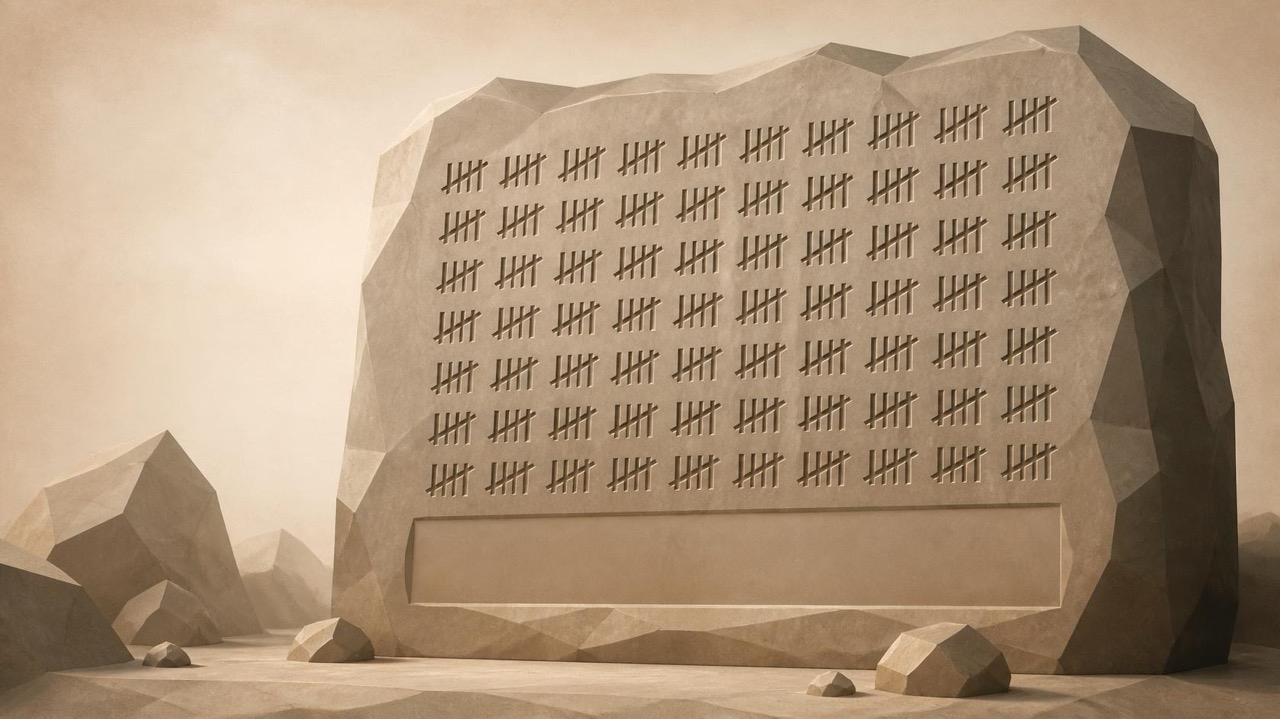
The pieces exist separately. Spain measures cultural employment and it measures the employment of people with disabilities. What it does not publish is the relationship between the two, which would answer a fundamental question: how many people with disabilities work in culture and under what conditions.
Nor is it sufficient to add the two operations together, as they do not share the same universe or level of detail. The INE's data only includes those with an administratively recognised disability and does not equate to all individuals who encounter barriers due to a disability, deafness, neurodivergence, or chronic illness. Europe Beyond Access, for example, states that it includes all of them and acknowledges that not all identify in the same way.
Audience is not employment
Eurostat does allow for the comparison of cultural participation between persons with and without disabilities. In 2022, the proportion of persons with disabilities who had been to the cinema, attended a live performance or visited a cultural site during the previous year was lower than that of persons without disabilities in every European Union country for which data were available.
That indicator describes the audience. It does not state who writes, acts, directs, produces, programmes, designs, interprets sign language, or holds decision-making power within an institution. Confusing the two levels presents a misleading image: an institution may improve access for its audience while maintaining the same barriers in recruitment, or it may hire an artist with a disability for a specific activity without changing anything in its staff or its positions of responsibility.
Funding without a baseline
In my view, this is the underlying problem. Without a baseline figure, it is impossible to verify whether these programmes change access to cultural employment, compare countries, or require an institution to explain the evolution of its hiring. The budgets, projects, and partners are known. The size of the professional group that the measures intend to benefit is not.
The Perform Europe accessibility supplement acknowledges that making a tour possible has its own costs. However, money spent does not demonstrate the result. To evaluate it, one would need to know which barrier was addressed, who was able to participate thanks to that measure, and whether it left behind a reusable practice.
What would need to be published
It is not necessary to resolve the entire measurement at once. A minimum and stable set of indicators, accompanied by their margins of error, would suffice:
- People employed in cultural activities or occupations, with and without a recognised disability.
- Activity, employment and unemployment rates.
- Self-employed and salaried work, working hours and type of contract, where the sample size allows.
- Distribution by major occupational groups and cultural sectors.
- Sex, age and education.
- Access to management positions.
- Annual evolution with comparable series.
Some cross-tabulations will yield small sample sizes, particularly when combining disability, occupation, sex, age and territory. Known solutions exist for this: grouping categories, publishing confidence intervals, noting imprecise estimates and, where the methodology permits, aggregating several years. Abandoning measurement is not one of them.
It is also necessary to explain whom the source excludes. Statistics based on administrative recognition do not represent all individuals with limitations or access requirements. In other operations, Eurostat uses self-perceived limitation in daily activities as an approximation of disability. Both perspectives address different questions. Choosing one or the other alters the observed population and, consequently, the result.
Meanwhile, the programmes
Until a public series exists, calls for proposals that finance inclusion may collect their own information, without shifting the burden onto applicants or requesting medical diagnoses. Aggregated and voluntary data would suffice:
- Participation of artists and professionals with disabilities, and roles performed.
- Contracting and remuneration modalities.
- Funded access measures and their cost.
- Participation in decision-making and positions of responsibility.
- Professional continuity following the activity.
- Barriers identified during production, touring and exhibition.
Such data would not replace official statistics. They would allow for verification of whether inclusion appears merely as a stated priority or also within selection, contracts, circulation and management. They would need to be collected with an explicit purpose, the minimum necessary data and guarantees of confidentiality.
Europe Beyond Access is not limited to presenting works. It declares that it operates through commissions, co-productions, tours, artistic exchange, research and advocacy. Its strategy for Deaf artists adds participation, visibility, knowledge of artistic practices and engagement with interpreters. This combination shifts the focus from ad hoc access towards professional development and leadership.
A baseline would not explain why someone leaves a tour, declines a residency, fails to reach a call for proposals or remains outside a professional network. This requires qualitative research, continuous consultation and the participation of the artists themselves. Yet, without the basic figure, it is impossible to know if the distribution of employment is changing.
About the open conversation
This text concerns the professional presence of artists and cultural workers with disabilities, not their access as audience members. The accessibility obligations of certain public cultural centres are detailed in what Royal Decree 707/2026 requires of museums and cultural centres, and the distinction between easy-to-read, clear language and plain language is in easy-to-read, clear language, plain language and pictograms.
Sources
Europe Beyond Access, strategy for Deaf artists, 23 September 2026.
Europe Beyond Access, 2024-2027 programme.
Perform Europe, third call for proposals.
Perform Europe, 2026-2028 call guidelines.
Ministry of Culture, cultural employment statistics.
Eurostat, cultural employment statistics.
Eurostat, cultural participation and disability.
Eurostat, disability statistics.
National Statistics Institute, employment of persons with disabilities.